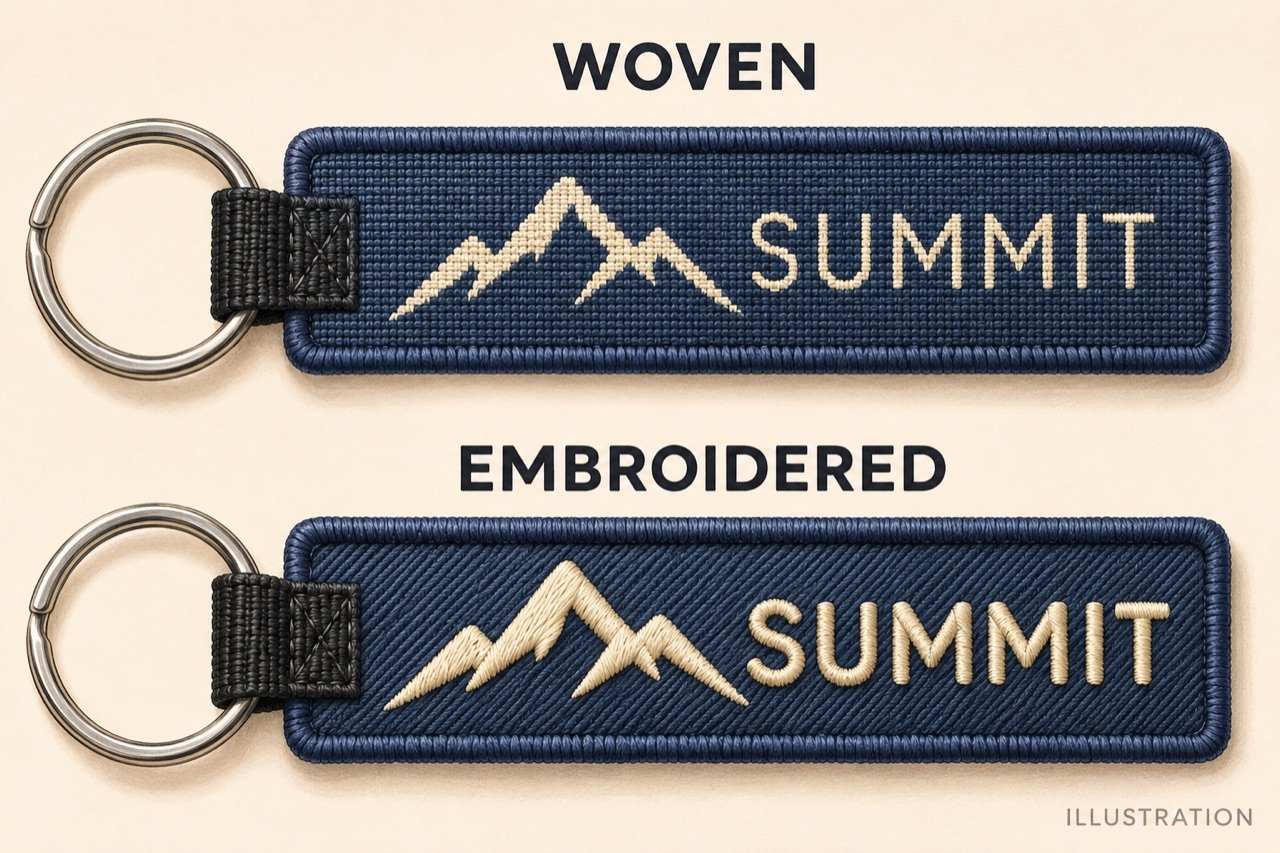
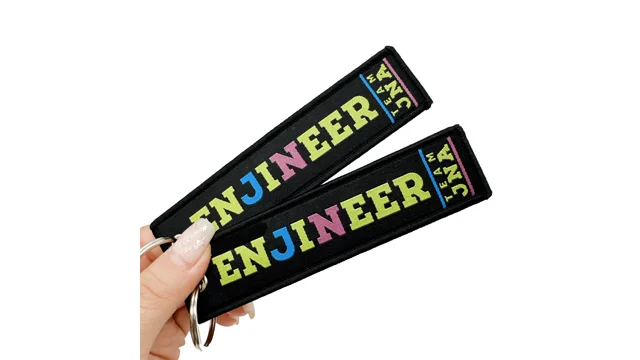
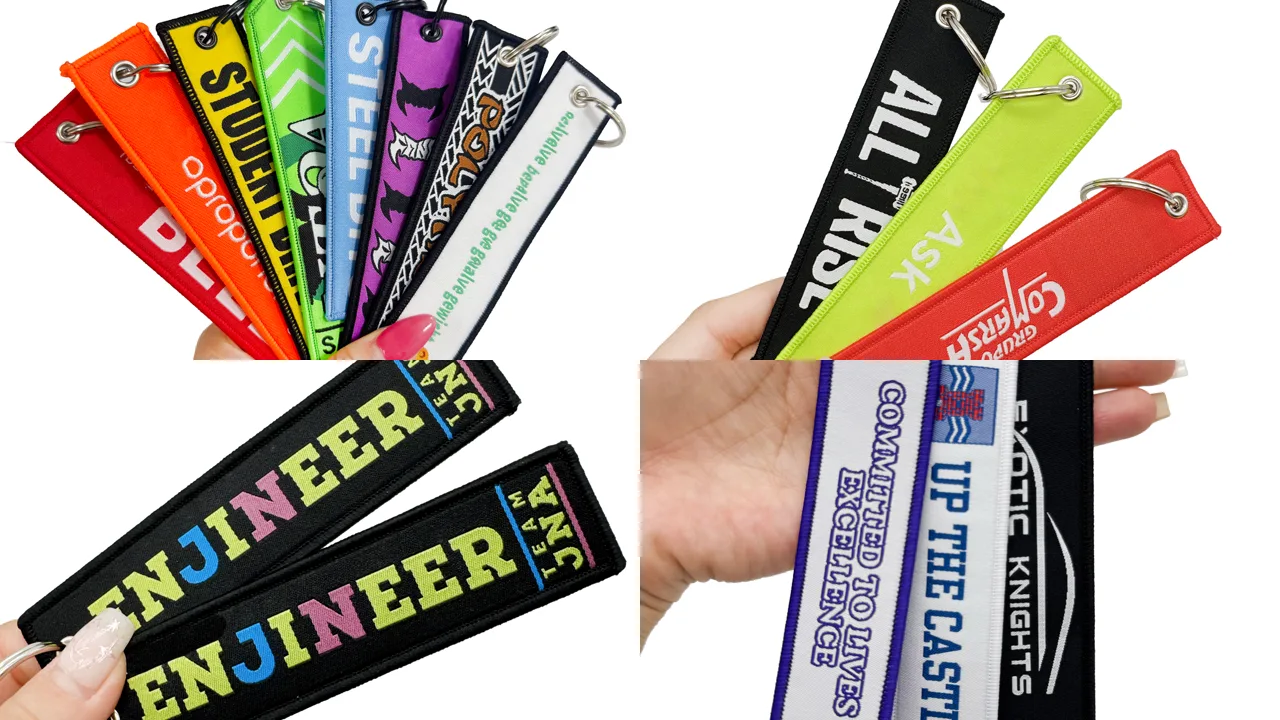
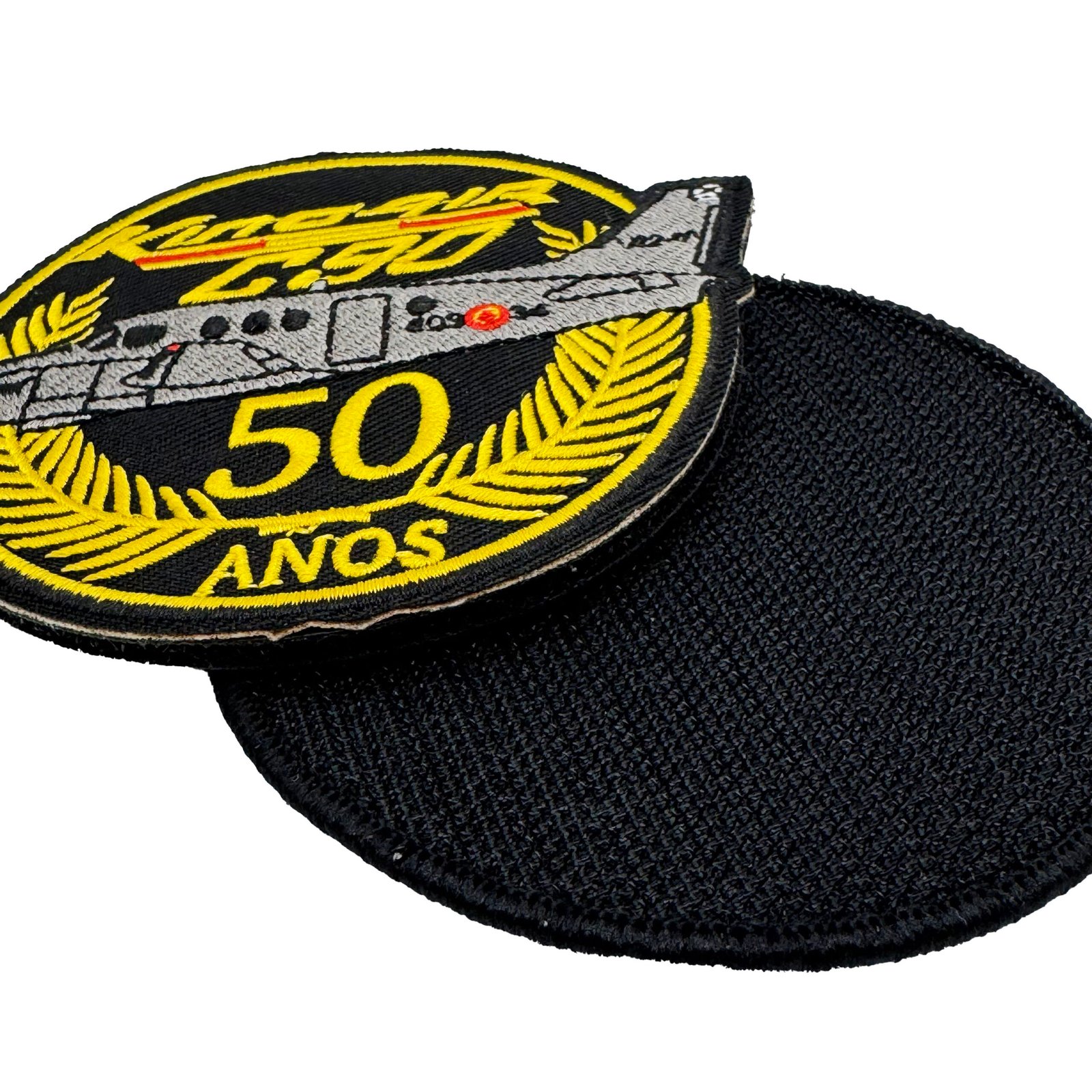
Sample photo: Embroidered key tags showing stitched lettering and finished edges.
A brand orders a batch of embroidered keychains with its logo on the front and a website address on the back. The PDF proof looks sharp. The finished sample tells a different story. The dot before “com” is hard to see, and two letters look like one. The sample is the right size, but the line the buyer needs customers to read has failed.
Before signing off on a bulk order, check the smallest required text on a finished sample. If you have room for a second sample, use it to answer one specific question, such as whether a little more letter height makes the address readable.
For a broader look at layout and construction, see our guide to keychain text, logos and edges.
Measure the lettering separately from the keychain
Give your supplier two measurements in millimetres. One is the finished width and height of the keychain. The other is the height of the critical lettering at that finished size. Mark the line on the artwork and tell the supplier which characters must stay exactly as supplied.
For example, a buyer might request a 90 × 25 mm tag and ask to compare a line of text at 3 mm and 4 mm capital-letter height. The tag size and thread colours stay the same. These measurements are an example of what to test. The sample determines what works for that design. Lowercase letters in the same line may be shorter than the capitals, and a tight font may need more room than a simpler one. Wilcom’s guide to embroidery fonts
When the font is part of the brand identity, tell the digitizer what can change. You might allow more space between letters while keeping the letter shapes, or move a slogan to the reverse so the main logo has more room.
Change one thing in each sample comparison
A useful first test compares the original layout with a version that changes only the critical line. Increase its height, open the spacing or shorten the wording with the brand’s approval. Keep the fabric, thread colours, edge finish and hardware consistent across both versions. This makes it easier to see which change improved readability.
If both versions are difficult to read, ask the supplier to explain what they see in the stitch-out. Are the gaps closing between letters? Are openings in characters such as a, e and 8 filling in? Is the line losing contrast against the fabric? Each issue suggests a different adjustment. If keeping every character matters more than keeping a stitched texture on that line, ask whether a woven or printed construction is available for comparison.
Review the finished keychain as a customer would
Start with the keychain in your hand under normal light. Read the required line before looking at a close-up. A magnified photo helps locate a defect, but the buyer’s first test is whether the information can be read at the intended size.
Then check the piece assembled with its final edge and hardware. On a narrow tag, there may be enough room on the flat artwork and less useful space next to the ring attachment. Turn the sample over and check the reading direction on the reverse. For merchandise packed on a backing card, ask to see the card and keychain together before approving the layout.
Use a short approval checklist
- Finished size and smallest required line — Record tag dimensions, wording and measured letter height.
- Readability — Check that letters are distinct, required punctuation is visible and the full line can be read in hand.
- Thread and fabric colours — Record the approved thread reference and fabric colour for each side.
- Assembly — Check the edge finish, front-to-back alignment and position of the ring.
- Production reference — Record the approved artwork version, sample ID and approval date.
For remote approval, ask for a straight-on photo of each side next to a ruler, plus a close-up of the smallest line. For a key detail that is difficult to judge in photos, request the physical sample. Put the sample ID and the approved artwork version on the purchase order so the same reference can be checked during production and on reorders.
Frequently asked questions
What is the minimum letter size for an embroidered keychain?
It depends on the font, digitizing, thread and base material. Send the artwork at the intended size and ask for a stitch-out of the smallest line. Record the height that works on the approved sample.
Can I approve production from a digital proof?
A proof is useful for spelling, layout and placement. For tiny lettering, also check a stitched sample so you can judge the gaps, contrast and readability on the intended fabric.
Send the artwork you want tested
Share the finished dimensions, front and reverse artwork, smallest required text, quantity per design and hardware preference. If you want two versions sampled, ask for separate sampling costs and timings in your quote. See the embroidered keychain bulk quote guide for the rest of the order details. To send your file, open the custom embroidered keychains product page and choose Get a Bulk Quote.