A brand is planning a fabric keychain for a merchandise drop. The front has a bold monogram, while the reverse carries a short URL. A raised stitch gives the monogram the look the designer wants. The URL is the line the buyer needs people to read. Before requesting a quote, decide which requirement has priority and whether the front and back need the same treatment.
A woven keychain is worth sampling when the artwork has closely spaced letters or fine lines. An embroidered keychain is a good starting point when the design relies on visible stitch texture and a raised logo. Compare both as finished keychains at the size you plan to order.
What changes when the design is woven or embroidered?
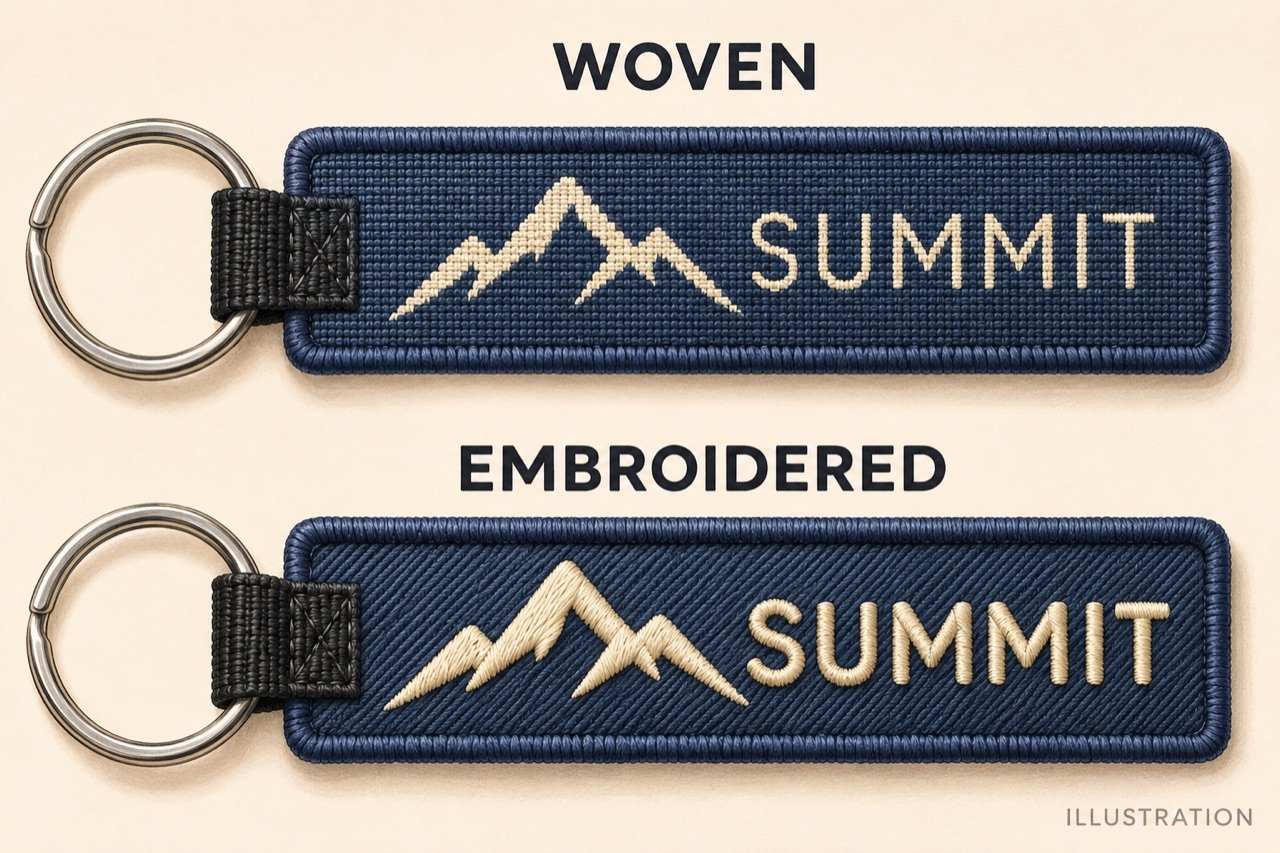
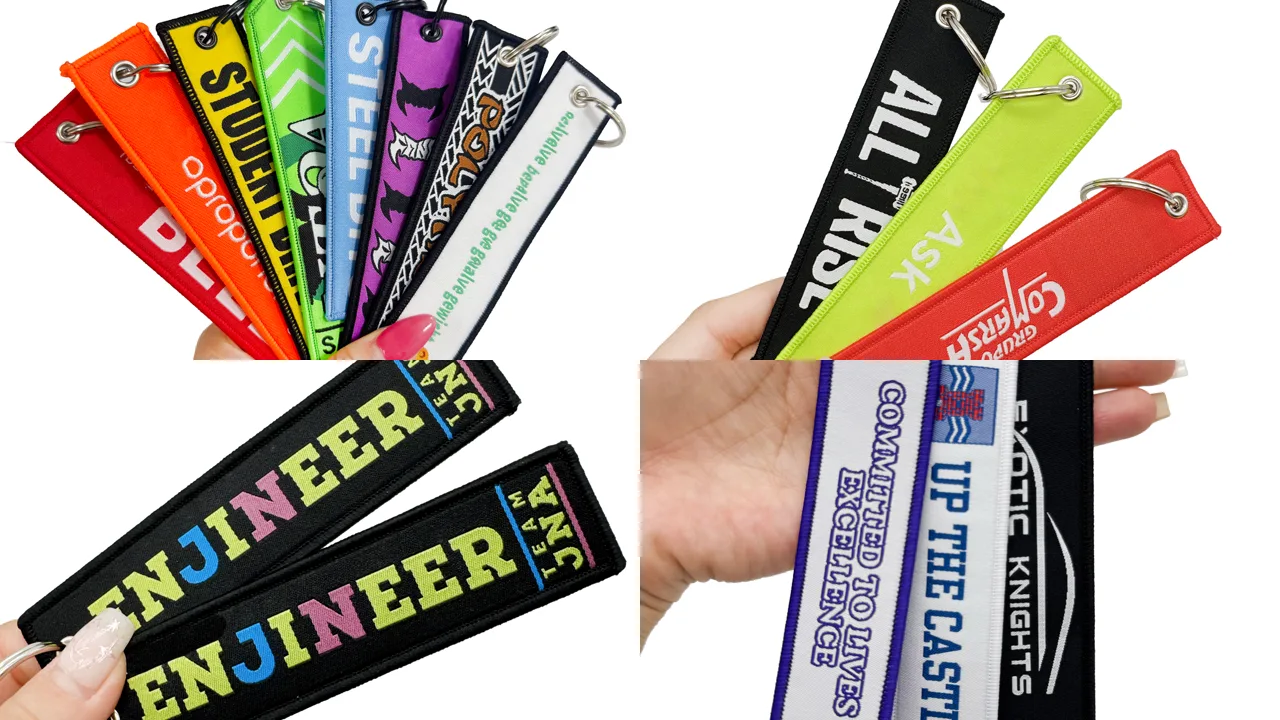
With weaving, coloured yarns form the artwork as the fabric is made. This generally gives the face a flatter finish and can help preserve fine lines and closely spaced details. Some weave qualities still struggle with very small graphics. Show your supplier the smallest feature and ask what the proposed weave can reproduce at your finished size. Talon International woven label technical guide
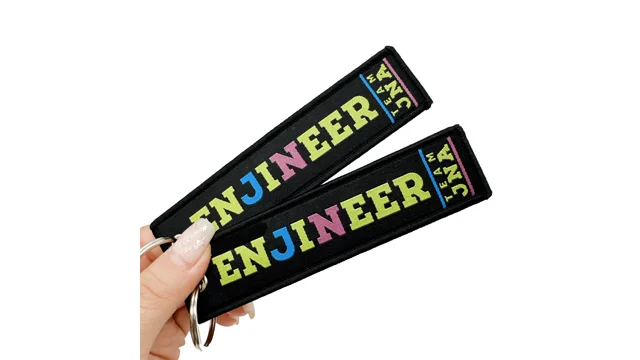
With embroidery, stitches sit on a base fabric and give the design more visible texture. This suits simple marks, bold lettering and designs where the stitch direction is part of the look. For fine text, the font and the height of each character matter. Lowercase letters may stitch smaller than the capital height suggests. Wilcom embroidery font guide
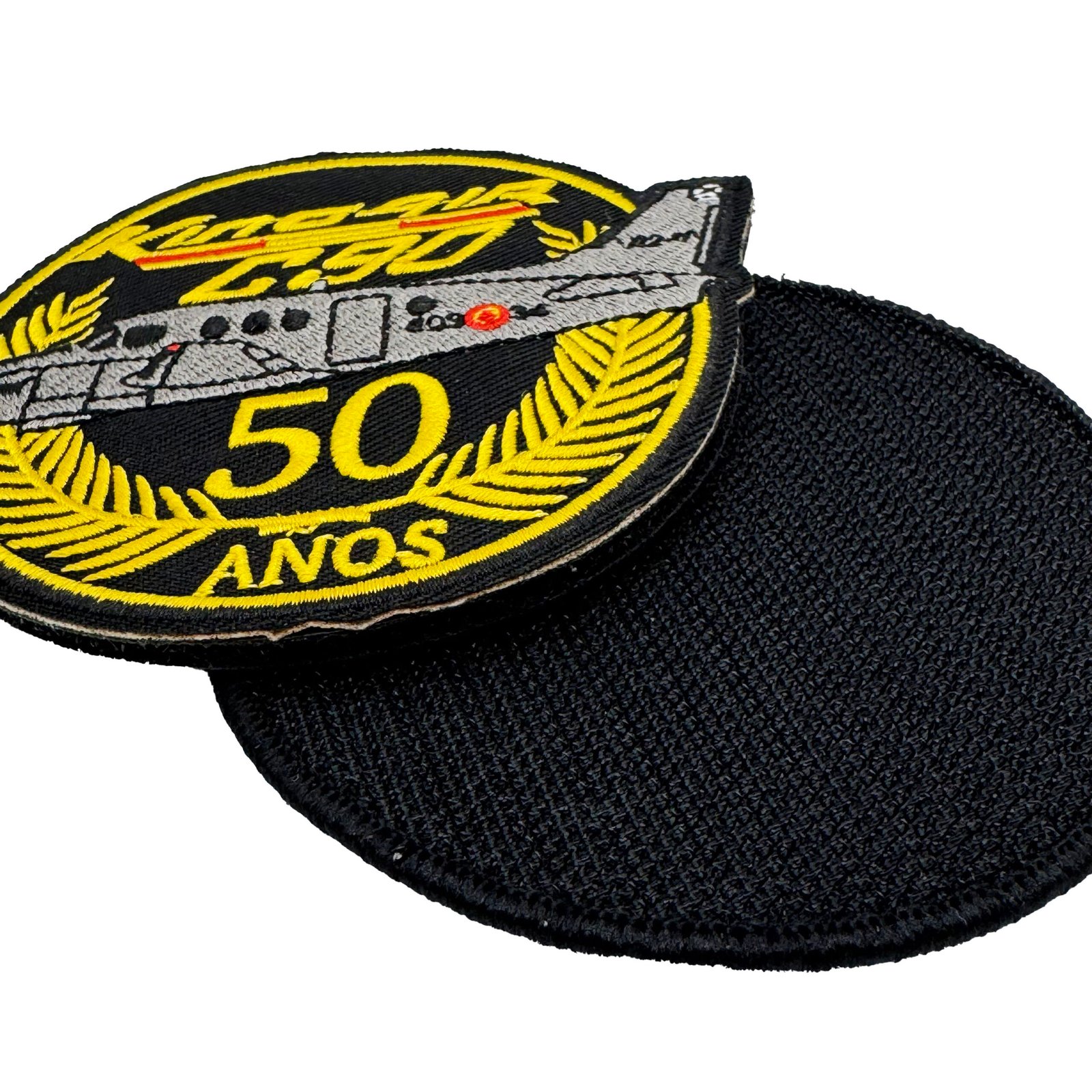
These differences describe the decorated face. The finished keychain also includes its backing or reverse, edges and attachment. Ask for the assembled piece if you need to judge how thick it feels or how freely it hangs from the ring.
Choose based on what the customer needs to see
- A short URL, a sponsor line or a logo with fine outlines — Sample woven first. Check that the smallest letters, punctuation and narrow gaps stay visible.
- A bold monogram or a logo where raised stitching is part of the design — Sample embroidery first. Check that the stitch texture looks intentional and the shape reads clearly at arm’s length.
- A textured front and detailed information on the reverse — Ask whether the supplier can make a mixed construction. Check alignment, the edge and that the ring attachment sits clear of both designs.
- A slim tag for a retail backing card — Compare assembled samples. Check thickness, how the keychain sits on the card and whether the ring turns freely.
For example, if the front monogram can be read from a display hook but the reverse URL is unreadable in hand, the sample still has a problem. Try a woven version at the same size, or ask the brand team whether the URL can move to the backing card. That choice determines what the supplier needs to make and what you need to approve.
Give both suppliers the same brief
If you are comparing the two constructions, send the same front and reverse artwork, finished dimensions and quantity per design. Specify the same ring, attachment position and packing. Tell the supplier which details are mandatory and which can be simplified. A comparison gets hard to use if one quote includes a printed card and split ring while the other covers bulk packing and a different attachment.
Ask for the unit price, any setup or sample charge, packing cost and lead time for each version. If a mixed front and reverse construction is possible, request its price separately. For a full breakdown of what to include, use the embroidered keychain bulk quote guide.
Compare the two samples before approving bulk production
Lay both finished pieces side by side under the same light. Read the smallest line at normal viewing distance, check that the front and reverse face the right way, and inspect the edge where the two faces meet. Turn the keychain on its ring and check that the attachment stays clear of the design. If you are buying for retail, put each sample on the intended backing card and see what the customer will actually see.
Record the construction, artwork version, thread or yarn colour reference, finished dimensions and approved sample ID on the order. If an embroidered sample is your choice but its small text still needs work, use the small lettering approval checklist to give the supplier specific revision notes.
Frequently asked questions
Is woven always easier to read?
Fine weaving can help with small detail. Contrast, letter spacing and finished size still matter. Review the smallest line on a sample made with the proposed construction.
Can I use the same artwork for both samples?
Start with the same source artwork and specify which features must survive. The weaving and embroidery teams may prepare their production files differently. Review any proposed changes before they sample.
How do I ask for both options?
Send the artwork for each side, finished size, quantity, hardware and packing. Tell the supplier whether you want both options quoted or only the option they recommend after reviewing the artwork. Visit our custom embroidered keychains product page and use Get a Bulk Quote to share your brief.