Custom Promotional Products Quality Control Checklist: From Artwork Approval to Shipment Inspection
Custom Promotional Products Quality Control Checklist: From Artwork Approval to Shipment Inspection
Introduction: quality is designed into the order, not inspected into it later
For custom promotional products, a final inspection is important, but it cannot repair an unclear order brief. A PVC keychain with a soft colour boundary, an embroidered patch with unreadable lettering, or a medal packed in the wrong individual bag can all be manufactured exactly as the supplier understood the order. The practical question for a buyer is therefore not only “Will the factory inspect it?” but “What, exactly, has been agreed for the factory to inspect?”
This guide is for importers, brand teams, event organisers and merchandise buyers sourcing custom keychains, patches, medals, fridge magnets and related products. It explains the checkpoints that make a bulk order easier to evaluate: artwork approval, pre-production reference, in-process checks, packing confirmation and pre-shipment inspection. It does not promise that every product requires the same test. The correct inspection plan depends on material, attachment, intended use, packing and destination market.
The short answer: what should be checked on a custom promotional order?
Before shipment, compare the goods against an approved specification covering: artwork and colour, dimensions and thickness where relevant, material and finish, attachment or backing, functional assembly, individual packing, carton marks, quantity and visible defects. The inspection should use the same signed-off references that were used to start production.
For most B2B projects, the strongest control is a simple chain of evidence: an approved artwork proof, a written product specification, retained sample photos or a physical reference where needed, and a shipment inspection record. That chain makes questions easier to resolve because the buyer and factory are comparing the same standard.
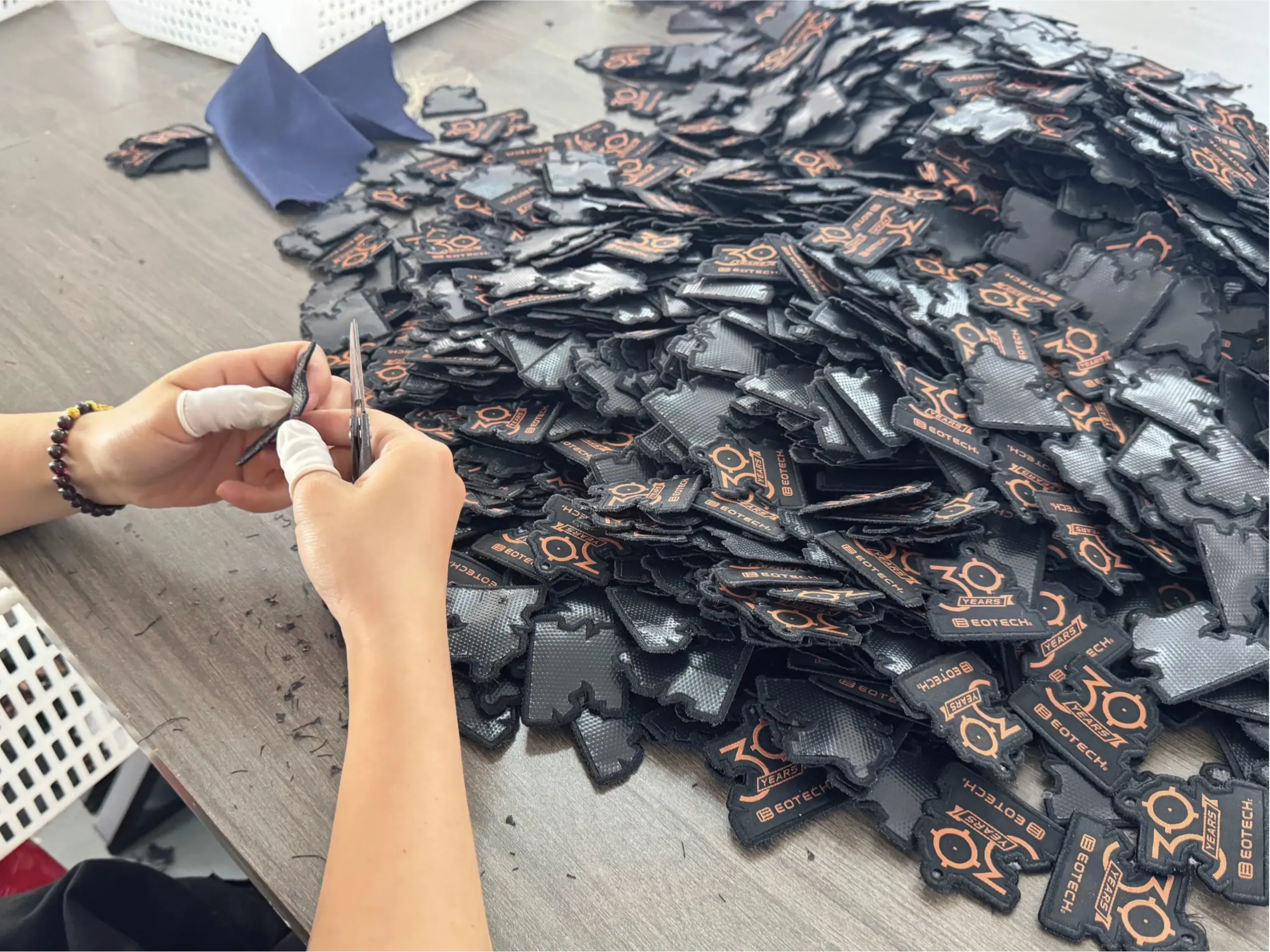
Factory quality control in progress 1. Start with a quote-ready quality specification
“Same as the picture” is not a workable quality standard. Product photos can be affected by lighting, screen settings and image editing, and they rarely show attachment details or packaging. Instead, use a specification sheet that separates the decisions below.
Product appearance
Final artwork file and revision number
Front and back layout
Finished width, height and any critical thickness or relief requirement
Colour references, such as named colours or an agreed production proof
Metal plating, PVC surface level, embroidery thread coverage, printed area or edge treatment
Construction and function
Split ring, clasp, chain, magnet, pin, hook-and-loop or heat-apply backing
Placement and orientation of each accessory
Whether the item needs to hang, adhere, fasten or withstand repeated handling
Any critical sharp-edge, loose-part or alignment concern
Packing and delivery
Individual polybag, backing card, paper sleeve, gift box or retail label
Master-carton quantity and carton marks
Count method for mixed designs or assortments
Delivery country, required date and any requested shipping mark
This is not bureaucracy for its own sake. A buyer comparing two quotations needs to know whether both include the same material, attachment, packing and delivery basis. It also gives a factory team an unambiguous inspection reference.
2. Review artwork as a production document
Artwork approval is where many avoidable quality issues begin. A graphic that looks clean on a large monitor may not read at a 45 mm keychain size. Fine gaps can close in PVC, tiny lettering can lose definition in embroidery, and a plated metal line may need more width than it appears to need in a digital illustration.
Ask the supplier to review the file against the selected production process, not merely confirm that it can be opened. For a PVC product, the review should identify colour areas, raised or recessed levels, small gaps and attachment location. For embroidered items, it should address stitchable detail, border type and backing. For metal goods, it should show line work, colour fill, plating and hardware position.
When customer requirements include a brand colour or a licensed character, keep the approval route clear: identify who can sign off the proof and which revision is final. Avoid moving directly from a verbal approval to mass production. A dated PDF or email approval is usually easier to trace later.
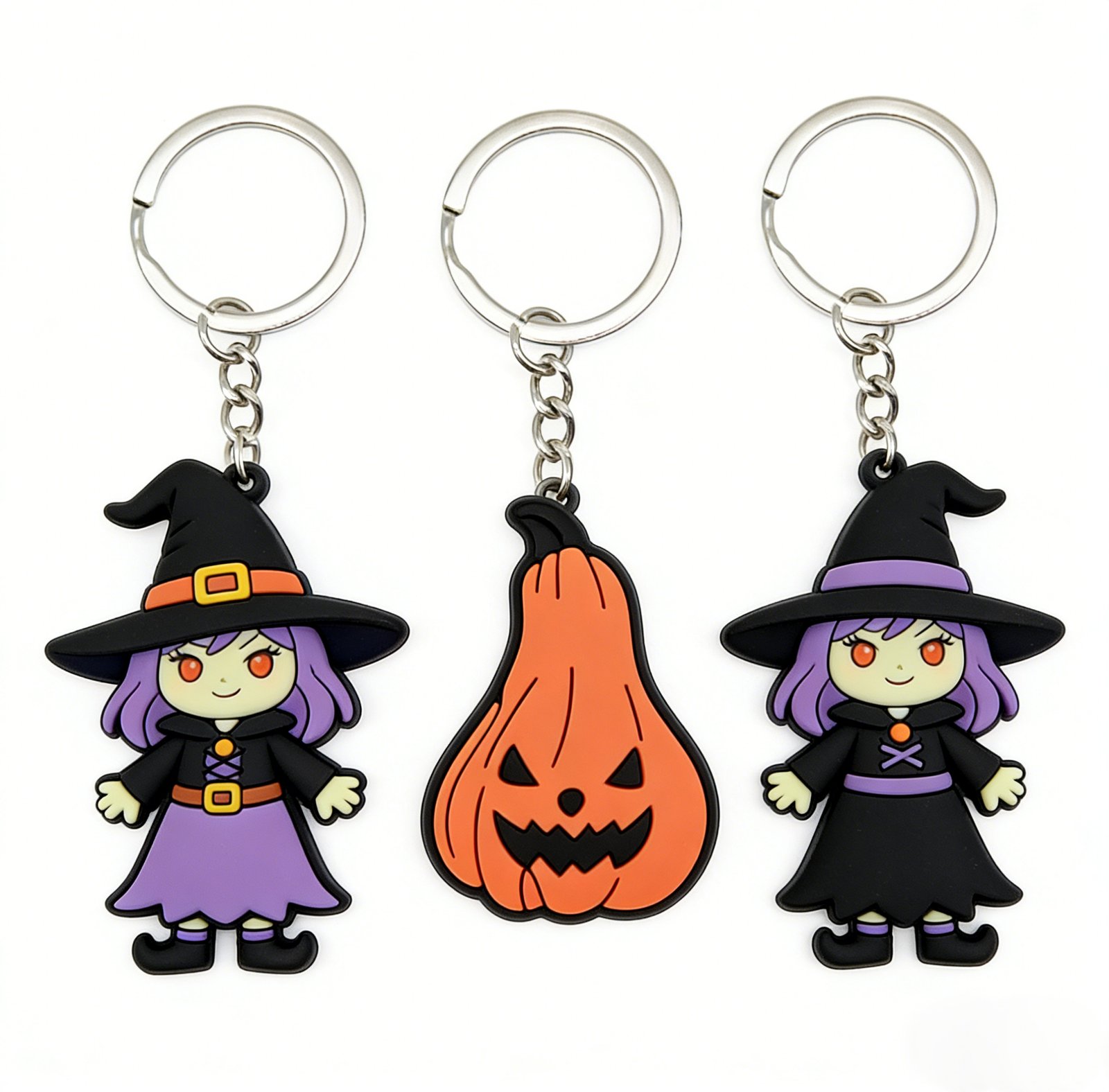
Close-up of a custom PVC keychain showing raised colour areas 3. Use a pre-production sample or production reference when risk is high
Not every order needs a paid physical sample, but every order needs an agreed production reference. The right option depends on the consequence of an error. A first-time retail programme, a multi-colour mascot, an event with a fixed date, or a product using a new attachment generally deserves more review than a repeat of an established design.
A pre-production reference can include approved digital artwork, close-up photos of the first completed pieces, a colour or material swatch, or a physical sample. The buyer should ask what the reference is intended to validate. For example:
Is it validating colour placement and line readability?
Is it validating a hook-and-loop backing against the actual garment panel?
Is it validating packaging dimensions for a retail display?
Is it validating the pull and rotation of a keychain attachment?
In factory testing and first-piece review, the most useful result is not a generic “looks good.” It is a short record of the checks performed and any approved tolerance. A product that needs to fit a card, pouch or display fixture should be tested with that item, not assessed in isolation.
Mid-article CTA — Get a Quality Checklist for Your Product
Send your product type, artwork, quantity and destination. Ask for a quote that lists the production, packing and inspection points relevant to your project.
4. Check the points that matter during production
In-process quality control is not always visible to an overseas buyer, yet it is where consistency is protected. Production teams typically look for material condition, colour separation, moulded or stitched detail, component placement and obvious surface defects before finished goods reach packing. The buyer can make these checks more useful by naming the critical-to-quality points in advance.
For PVC keychains and fridge magnets, typical visual points include clean colour boundaries, correct relief, legible small details, stable magnets and properly seated rings or clasps. For patches, confirm border shape, thread coverage, backing application and attachment alignment. For metal products, inspect plating consistency, colour fill, burrs, scratches and hardware security. These are examples, not a substitute for a product-specific plan.
If an order has multiple SKUs, colourways or packaging versions, require identification that keeps them separate through production and packing. Mixed cartons are not necessarily wrong, but they should be intentional and clearly counted. A simple SKU reference on the packing list can prevent a last-minute relabelling problem.
Organized factory warehouse and export packing area 5. Plan a practical pre-shipment inspection
Pre-shipment inspection should answer three questions: are the goods the approved product, are they packed as agreed, and is the shipment count consistent with the order? The inspection scope should be agreed before the finished goods are sealed into export cartons.
A usable inspection checklist
Identity: confirm SKU, artwork revision, product name and quantity.Appearance: compare randomly selected units to the approved proof or sample for colour, shape, finish and visible defects.Dimensions: measure only the dimensions that matter to function, packaging or the buyer’s specification.Assembly: check rings, clasps, magnets, pins, backings and other attachments for fit and orientation.Packing: verify individual bags, cards, labels, assortment ratio and master-carton count.Carton condition: confirm cartons are dry, labelled and suitable for the agreed transport method.Records: retain photos of the selected goods, packing and carton marks, plus any agreed corrective action.
Sampling should be proportional to the order and risk. A buyer does not need to invent a complex laboratory programme for ordinary merchandise, but high-risk claims or market-specific compliance requirements should be discussed separately with the supplier and relevant testing provider.
6. Do not confuse visual inspection with compliance verification
A factory or third-party inspection can confirm visible condition and agreed construction. It does not automatically establish compliance with every regulation, chemical restriction or safety requirement in every market. If your product is for children, food contact, a regulated market or a buyer programme with specific test requirements, state those requirements early and ask for applicable documentation or testing options.
Trustworthy sourcing language is specific: a supplier can explain what was checked, what reference was used and what document is available. Avoid treating a logo, a general statement or a product photo as proof that a particular finished item meets a specific legal requirement.
Custom PVC medals arranged as repeat-order product references 7. Build repeat-order quality into the records
The easiest order to control is a repeat order with a stable reference. Store the final artwork, approved colours, dimensions, packaging layout, photos and the issues resolved on the first production run. On a repeat order, ask the supplier to confirm whether the material, process, mould, attachment or packing has changed.
This is especially useful for branded merchandise programmes. A distributor may place several smaller replenishment orders over a year; a museum shop may need the same magnet display card every season; an event organiser may repeat a medal format while updating the year. A concise master specification makes those changes visible rather than accidental.
FAQ
What is the difference between a pre-production sample and a pre-shipment inspection?
A pre-production sample or approved production reference confirms what will be made before bulk production. A pre-shipment inspection checks finished goods and packing against that agreed reference before dispatch. Both are useful, but they solve different risks.
Should every custom promotional product be physically tested?
No. The appropriate checks depend on the product’s use, material, attachment and market requirements. For many projects, visual, dimensional, assembly and packing checks are the core. Add product-specific testing when the intended use or buyer requirement calls for it.
What information should I send a supplier before inspection?
Provide the purchase order, approved artwork, product specification, sample or proof photos, approved packing layout, quantity by SKU and a list of critical points. If you have an acceptance tolerance or a third-party inspection standard, share it before production is complete.
Can shipment inspection prevent every defect?
No inspection eliminates all risk. Its value is that it detects defined issues before shipment and creates a documented basis for corrective action. Clear artwork, early sample approval and in-process controls reduce the number of issues that reach final inspection.
Conclusion
Quality control for custom promotional products starts with a specification that a factory can produce and a buyer can inspect. Use artwork approval to resolve details before production, create a reference for first pieces, focus inspection on the product’s real application, and document packing as carefully as appearance. That process is practical for a single custom keychain design and scalable for a multi-SKU merchandise programme.
CTA: request a quote with a product-specific inspection plan
If you are sourcing keychains, patches, medals, magnets or other branded merchandise, send your artwork, finished size, quantity, packing requirements and destination. Heyang Craft can review the production details and identify the relevant approval and shipment-inspection points before you commit to a bulk order.