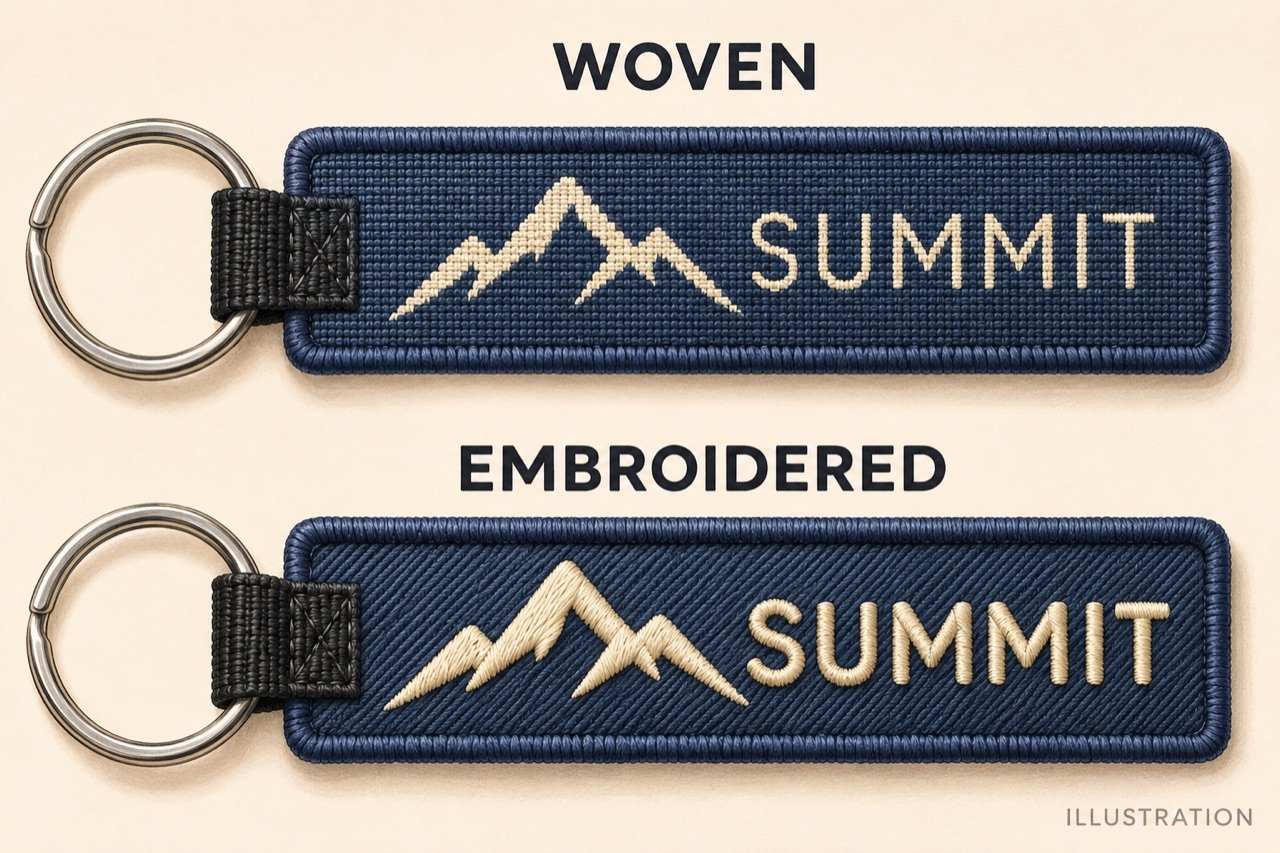
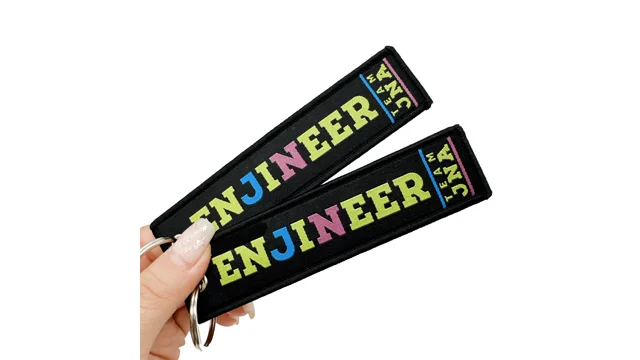
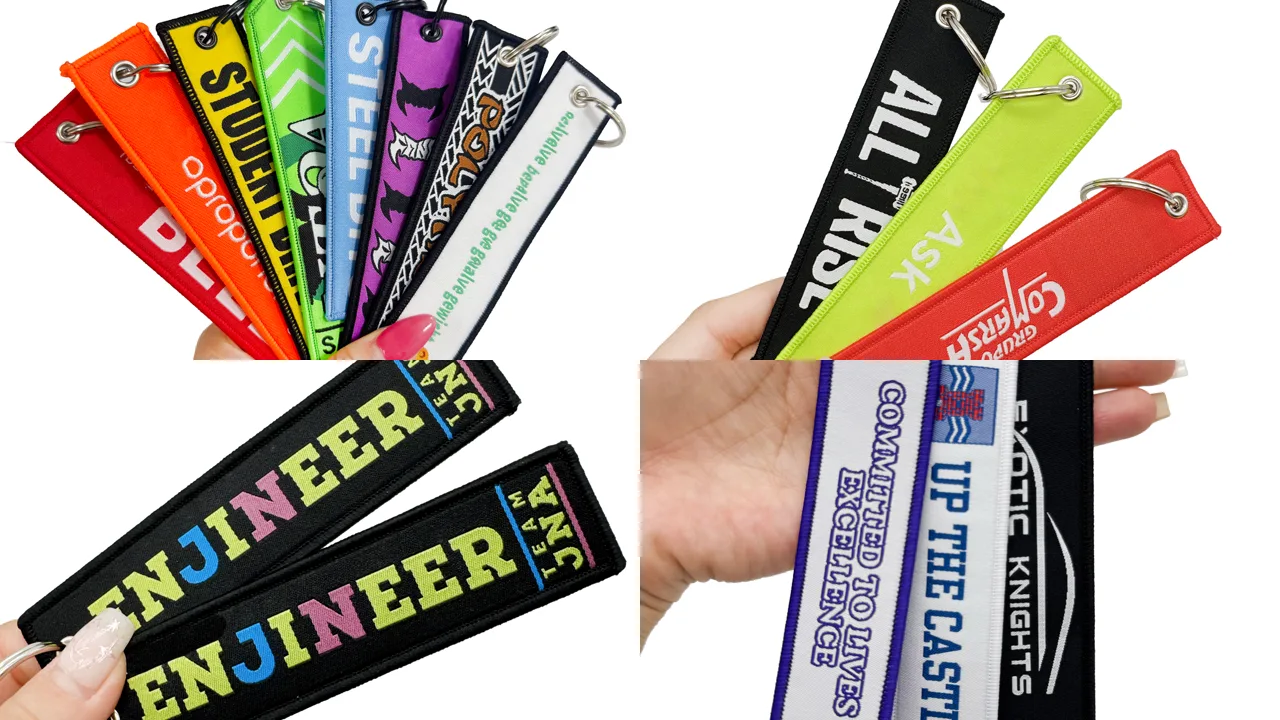
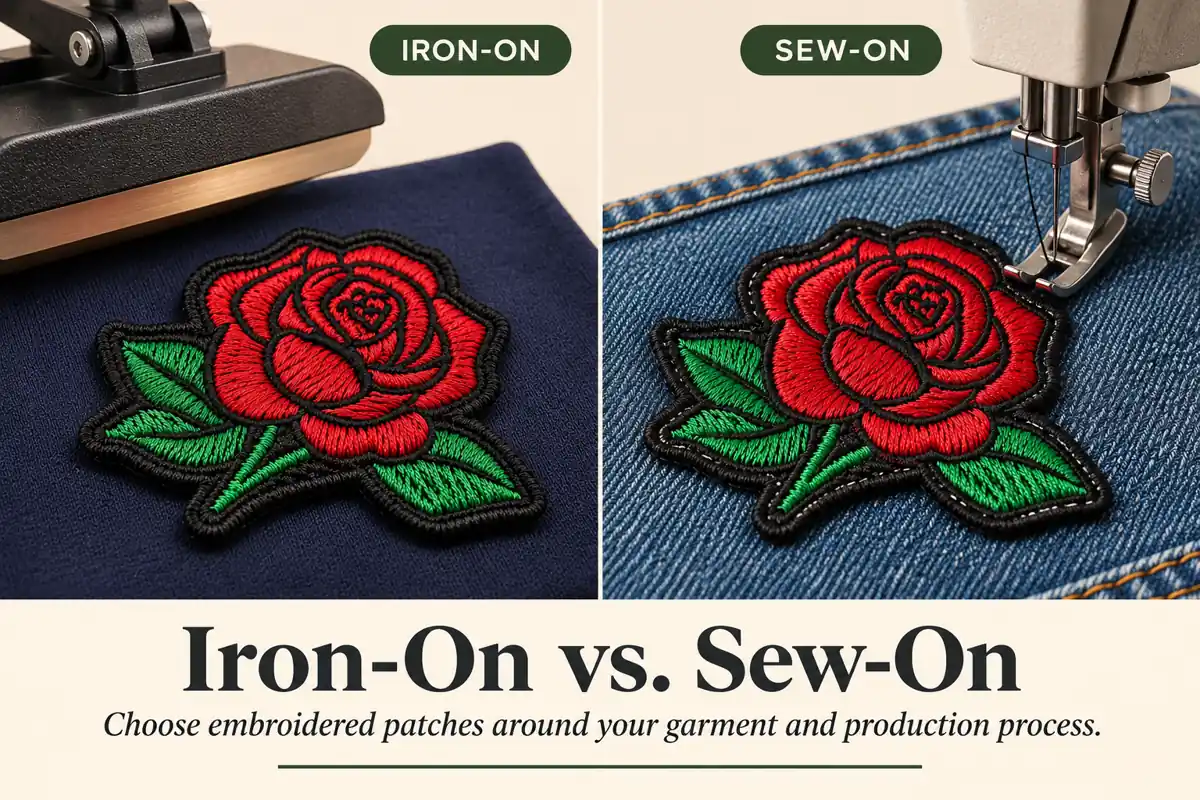
Before requesting embroidered keychain samples: prepare the finished dimensions, a separate view of each side, the exact wording, colour references and ring position. The useful approval reference is the design at its actual tag size, together with a written specification—not an enlarged logo image alone.
This guide helps apparel brands, wholesalers and merchandise teams hand over artwork for custom embroidered keychains and key tags. Use it to reduce unanswered questions between your designer, buyer and manufacturer before a bulk order.
1. Send editable artwork and a clear visual reference
Provide an AI, EPS, SVG, PDF or other available editable artwork file, plus a PNG or JPG preview showing the intended appearance. A PDF may contain only a flattened image, so confirm that the supplier can work with the actual file rather than relying on the extension. If only a photograph or sketch is available, identify which details must be reproduced and which are reference only.
Include the exact text in a separate note. Identify the intended font or supply outlined lettering where available, while keeping your own editable original. A normal logo file is not an approved embroidery production file: the artwork needs review for the selected fabric, finished size and stitching process.
2. Label the front and reverse separately
Supply two clearly labelled views, even if the same design is required on both sides. State whether the reverse repeats the front, carries different text or stays plain. Mark the top edge and the position of the ring or eyelet so neither side is unintentionally rotated.
Specify the finished width and length in millimetres or centimetres, including the outline. Explain whether those dimensions refer to the textile tag only or include the attachment. Show the text orientation when the tag hangs from its ring. Construction and any front-to-back stitching visibility should be confirmed during sample review.
3. Review small details at the real finished size
Fine lettering, narrow gaps and closely spaced shapes may need adjustment when translated into thread. Ask for the artwork to be reviewed at the proposed keychain size. If a detail cannot remain clear, compare a larger tag, simplified artwork or a different textile treatment before agreeing the proof.
There is no useful universal minimum text size for every logo: letter shape, fabric, thread and construction all matter. Read our embroidered keychain text, logo and edge design guide for the design decisions to discuss alongside your artwork file.
4. Confirm colour, border and attachment in writing
- Colour: identify fabric and thread colours separately. Supply your brand colour references or an approved sample where available. Screen colours are a discussion reference; agree how the physical thread and fabric will be approved.
- Border: describe the outline and preferred edge finish. Check whether the shape, corners and ring area suit that treatment.
- Attachment: specify ring type, position and any additional connector. Include the attachment in the sample review rather than approving the textile tag alone.
- Packaging: identify bulk packing, individual bags or branded cards, and provide any card artwork as a separate approved file.
5. Separate proof approval from sample approval
A digital proof helps confirm layout, wording, dimensions and orientation. A physical sample lets you review stitch readability, thread and fabric appearance, reverse construction, edge finishing and the attached ring. Agree which approval steps are included in your quotation and what happens if artwork changes after approval.
Record comments against one numbered artwork revision. Avoid approving the front in one email and a different reverse version in another without a final combined reference. For repeat orders, retain the approved specification and sample reference, then flag any change to the design, hardware or packing.
Artwork handoff checklist for your quotation
- Artwork file and a readable preview, with revision name or date.
- Front and reverse views, exact text and finished dimensions.
- Fabric, thread, border and ring requirements.
- Quantity per design, size or colour variant, plus total pieces.
- Packaging, destination postcode and required arrival date.
- Requested proof or sample approval process.
List each design separately. Two designs at 50 pieces each mean 100 pieces in total; ask the supplier to confirm the applicable minimum and price for each specification. Separate production time from shipping transit time when planning delivery. For a consistent comparison, use our bulk quotation checklist.
Send your embroidered keychain artwork for review
Ready to prepare a sample or bulk order? Send your artwork, dimensions, quantity per design and delivery destination. Heyang Craft can review the proposed construction and confirm the quotation scope before production approval.