Introduction
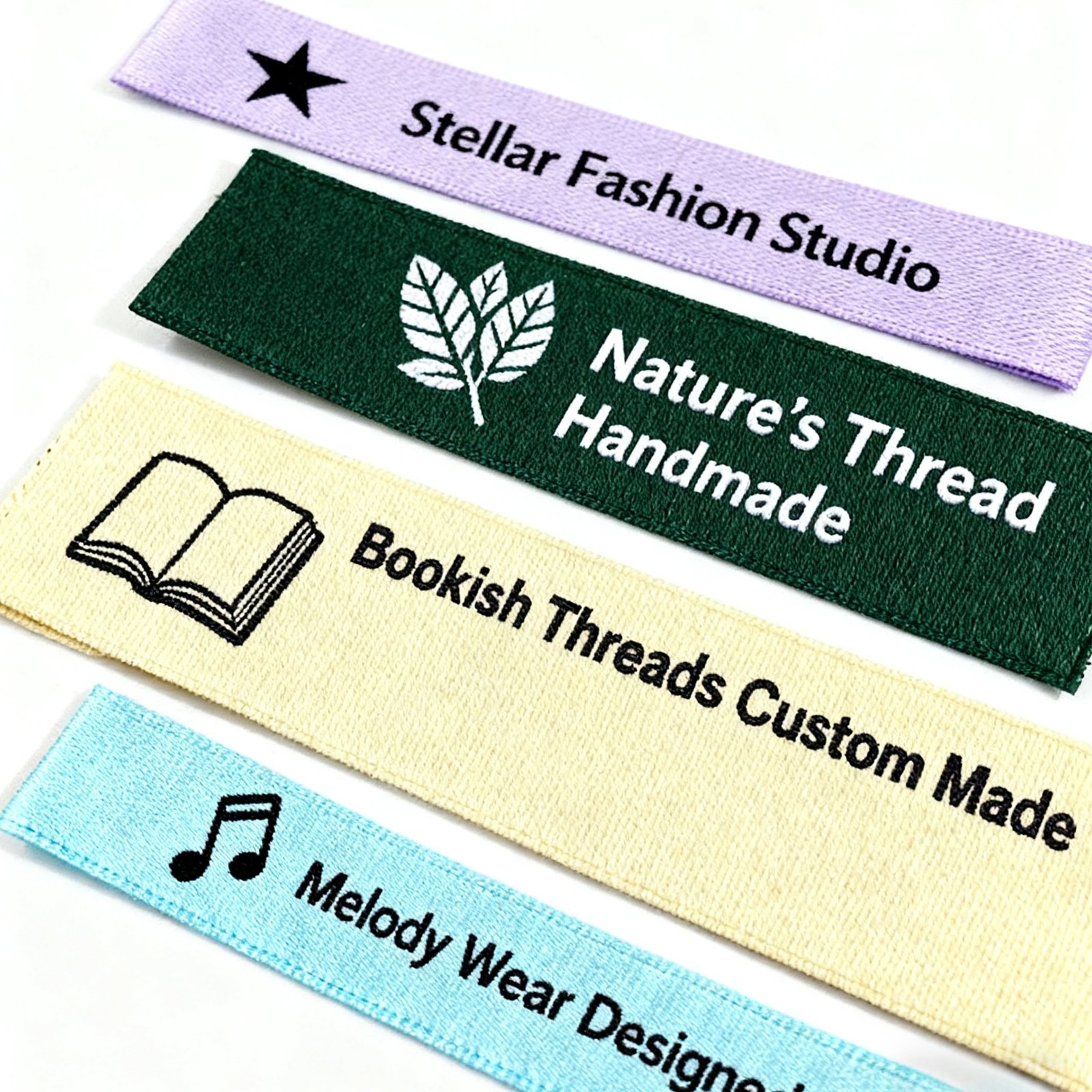
Buying custom woven label patches is rarely just a question of choosing a picture from a catalogue. A useful order converts a brand, event or retail concept into a repeatable specification the factory can quote, sample and inspect. For woven label patches, that conversation includes fine woven detail, edge finish and sew-in construction. The strongest result is not necessarily the most elaborate option; it is the option that keeps the important visual message clear and suits how the item will actually be used.
Custom product detail prepared for review. This guide is for B2B buyers preparing promotional, retail, recognition or uniform programmes. It explains the information worth deciding before a quote, how to use a proof and sample as control points, and how to prepare practical factory testing and shipment inspection. It deliberately avoids unsupported claims about lead times, safety standards or performance: these must be agreed for the destination and application.
Start with the application, not the finish
Before selecting a material or decoration method, define the job the product needs to do. Will the recipient carry it every day, display it, attach it to clothing or gear, receive it at an event, or buy it from a shelf? Is the design viewed close-up, recognised from a distance, or expected to survive repeated handling? The answers influence size, construction, attachment and packaging.
Then identify the non-negotiables: the required in-hands date, quantity by design, brand colours, target market, packaging format and destination. A buyer does not need to know every technical answer at the first inquiry. It is more helpful to state the application plainly and request options. This gives the factory a basis for explaining trade-offs instead of quoting an assumption that later changes.
Quote-ready brief checklist
Finished size, including any maximum size or approximate viewing distance.
Quantity for each artwork, colourway, finish and packing variant.
Source artwork plus notes on critical text, colours or design elements.
Intended use and recipient; include whether the item is worn, attached, handled or retailed.
Required fine woven detail, edge finish and sew-in construction, where known.
Individual packaging, insert, barcode, assortment and carton-marking requirements.
Delivery location and required arrival date, allowing time for proof approval, sampling, production, inspection and transport.
Material and construction decisions that affect the final result
There is no universal best specification. The suitable choice depends on whether visual detail, texture, durability, cost control or retail presentation matters most. A bold logo can often tolerate a different process from a detailed illustration. A campaign giveaway may need compact bulk packing while a collectible, recognition item or premium retail programme may benefit from a backing card or presentation box.
Ask each supplier to describe the proposed construction in plain language. It should say what the end user will see and touch, how the artwork is formed, which components are joined, and what is included in the quoted packing. This turns quotation comparison into a like-for-like exercise. A low price that omits an attachment, finish, insert or packing step is not a lower price for the same item.
Artwork approval is a manufacturing control point
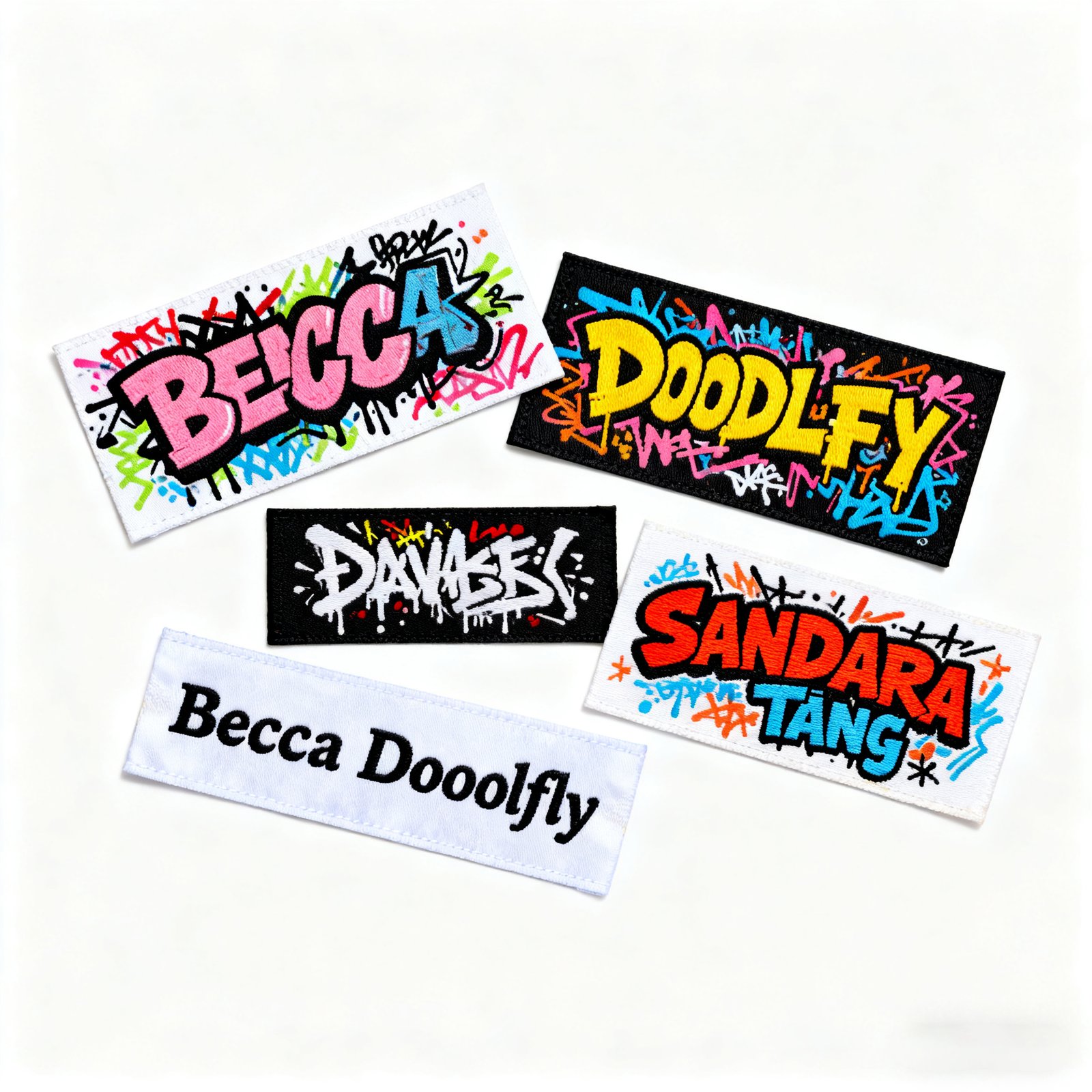
Artwork and material detail prepared for review. Treat the production proof as more than a visual mock-up. It should show the actual dimensions, orientation, front/back relationship, colour references and every functional component. Confirm spelling, dates, text size, logo placement and attachment position. If the design includes fine lines, small type, narrow gaps, gradients or closely matched colours, ask for a recommendation at the finished size. It is better to simplify a feature before sampling than to approve a detail that will not read clearly in bulk production.
For a physical sample, compare the item against the approved proof under ordinary lighting. Check the visual hierarchy first: is the important mark legible at the expected distance? Next check edge quality, component security, surface consistency and how the product fits the intended packaging. Record changes in writing before mass production starts. This creates a reference for both the factory and the buyer’s later shipment inspection.
Send Your Requirements
Share artwork, quantity, application and destination to build a quote-ready brief for Woven Label Patches .
Product-specific selection and project planning
For woven label patches used in apparel branding, bags, hats and private-label collections, procurement decisions work best when the buyer separates three questions: what must be visible, what must work, and what must travel safely. The first question is about the logo, message, illustration and brand colour. The second is about construction — whether the item must attach, hang, sit flat, open, carry an ID, endure handling or remain comfortable against a garment. The third is about distribution: individual presentation, retail display, event handout or bulk allocation. A decision that helps one question may affect another, which is why the production proof should show the complete item rather than only the decorated face.
For instance, a programme with a complex emblem should identify the emblem details that cannot be lost: perhaps a recognisable outline, a date, a short name or a contrast colour. The factory can then recommend how those elements translate into the selected construction. Conversely, a buyer should not insist that every pixel in a screen image is physically reproduced. Design adaptation at a small scale is normal; the responsible approach is to document it, assess a sample and confirm it is acceptable for the intended recipient.
Specify the features that are visible to the end user
At the outset, rank visible features as essential, preferred or optional. Essential features may be the logo, a branded colour, a readable name, an attachment type or a prescribed finished size. Preferred features might be a particular finish, insert card or extra colour effect. Optional features can be assessed once the factory has produced a priceable construction. This ranking keeps the discussion productive when the artwork, target budget and technical limits pull in different directions.
The same method makes change control simpler. When a proof comes back with a proposed adjustment, the buyer can judge whether it touches an essential feature or an optional one. Keep approvals in a single thread or document and identify the revision number. This is especially important when several teams — purchasing, marketing, events and compliance — are reviewing the project. A clear written approval is more reliable than relying on an old image or a verbal assumption.
Compare suppliers on scope, not only unit price
For a disciplined comparison, place quotations in a small matrix. List finished size, materials, decoration, components, packing, sample charge if any, production scope, inspection point, Incoterm or freight scope, and any tooling or set-up element. Then mark whether each supplier has explicitly confirmed each row. This approach often reveals why two prices are different and prevents an inexpensive-looking quote from becoming an expensive change request later.
Ask what is included in factory testing and what records can be supplied for the order. The answer may be photos, measurement records, sample retention or a packing list; it should be practical for the product and project rather than a vague assurance. If an independent inspection is planned, provide the approved reference and the checkpoints before the visit. Inspections are most useful when they verify an agreed specification, not when they are asked to invent one after production.
Prepare the receiving team
The project is not complete when cartons leave the factory. The receiving team may need to count mixed designs, attach products to displays, distribute items by name, sew or apply them, or stage them for an event. Include this handover in the brief. State pack quantities, SKU separation, label language, outer-carton marks and any instructions that should accompany the goods. For repeat orders, retain the approved proof, photos and packing specification so the next order starts from a known reference instead of from memory.
Factory testing and shipment inspection
Testing should reflect the real application. A factory may inspect visual consistency, dimensions, assembly, attachment security, surface finish and pack count. If a special market, regulatory or functional requirement applies, state it before production and obtain confirmation that the proposed test is relevant. Do not assume that a generic product test proves suitability for every use or destination.
Keep a dated approval pack: the final proof, sample photographs, material description, colour reference and packing layout. During production, compare selected finished pieces against that reference rather than only checking loose components. At shipment inspection, focus on the features the recipient will notice: clean appearance, consistent size, secure construction, correct orientation, packing quantity and carton marks. Photograph exceptions and agree their disposition before cartons are sealed.
Packaging and installation preparation
Packaging affects brand presentation, count accuracy and freight efficiency, so it belongs in the production brief. A simple protective bag may be appropriate for bulk distribution; retail projects may require a backing card, insert, barcode or gift box. If the item needs installation or assembly after delivery, decide who will do it and whether the receiving team needs instructions, tools or an allowance for extra pieces.
For time-sensitive events, work backwards from the arrival date. Allow for artwork clarification, proof approval, pre-production sampling where needed, bulk production, inspection and transport. Early decisions are particularly valuable when an order includes multiple designs, mixed packs or special packaging.
Common sourcing mistakes
1. **Approving artwork without a finished size.** A screen preview can hide crowding at the actual scale.
2. **Leaving attachments or packing until late.** These often affect construction, dimensions and carton count.
3. **Comparing non-equivalent quotations.** Match material, finish, accessory, quantity and packing before assessing price.
4. **Treating the sample as a formality.** Use it to confirm the visual and functional points that matter to the end user.
5. **Ignoring handover after delivery.** Plan for sorting, installation, retail display or event distribution.
FAQ
Product detail from Heyang Craft. What is needed for an initial woven label patches quote?
Send artwork, quantity, finished size, intended use, any preferred materials or finishes, packing needs and destination. If some details are undecided, explain the application and request suitable options.
Can a detailed design be reproduced exactly?
Every process has limits related to size and construction. The practical goal is to preserve the design elements that make the item recognisable. Ask the factory to flag details that need adjustment before sampling.
Is a physical sample necessary?
It is particularly valuable for new artwork, a new construction, premium retail packing or an order with strict brand expectations. It provides an approval reference for bulk production and shipment inspection.
What should shipment inspection check?
Use the approved proof and sample as references. Check visible finish, dimensions, functional components, packing count and carton marks, plus any agreed special requirements.
Conclusion
Successful woven label patches sourcing begins with a clear use case and ends with an approval reference that the factory and buyer can inspect against. Decide the size, construction, visible detail, components and packaging early; then use the proof and sample to remove ambiguity. This makes quotes easier to compare and helps ensure the delivered product supports its intended promotional, retail or event purpose.
Send Your Requirements
Contact Heyang Craft with artwork, quantity, intended use and destination, or view the Woven Label Patches product page .
Follow Heyang Craft: Facebook · YouTube · Instagram · TikTok