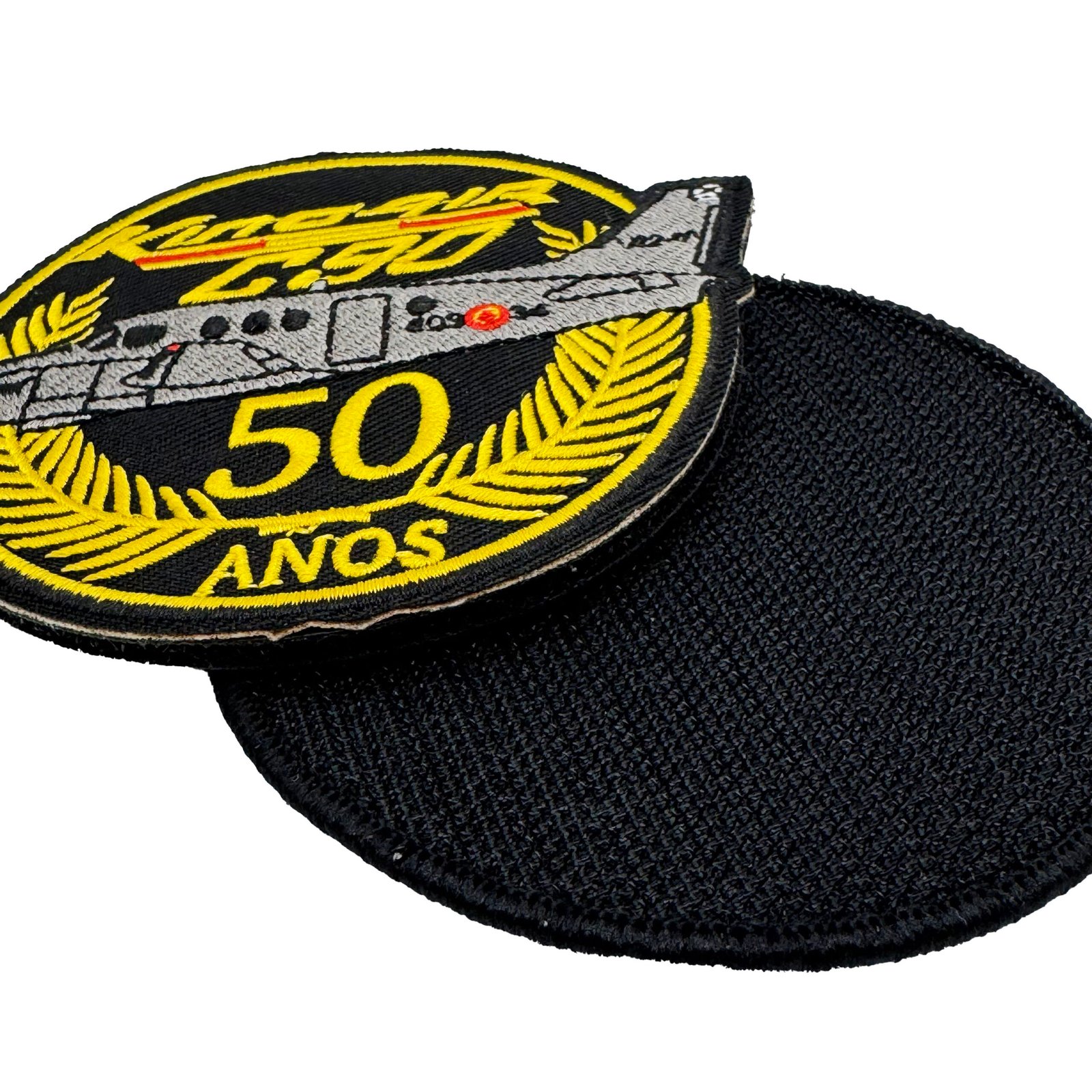
Quick answer: Custom embroidered patch cost depends on the finished size, stitched coverage and logo detail, backing, border, quantity per design, and packing. Compare the complete order cost, including any artwork preparation, sampling and shipping charges. A unit price is useful only when the suppliers are quoting the same specification.
This guide helps brand teams and wholesalers prepare a comparable quotation. For available customization and project enquiries, visit our custom embroidered patches product page . If you are still choosing a construction, read the PVC versus embroidered patches comparison first.
Confirm the size, stitched coverage, border and backing for each design. What should an embroidered patch quotation include?
Ask for a written quote linked to a specific artwork revision. Separate the product price from one-time or optional items so you can compare the first order and a possible reorder fairly.
Embroidered patch quotation comparison checklist
Quote item
What to confirm
Why it matters
Patch specification
Finished dimensions, shape, fabric, thread references and artwork version
A similar-looking sample may use a different construction or size.
Backing and border
Attachment method, edge finish and any matching loop panel
A hook-backed patch and a complete hook-and-loop pair are different supply scopes.
Quantity
Pieces per design, size and colour variant
A combined total does not explain how many different specifications need production.
Artwork and samples
Preparation charges, sample cost, revisions and approval process, if applicable
These may be separate from the quoted unit price.
Packing and delivery
Bulk or individual packing, destination, freight basis and exclusions
A product-only quote cannot be compared directly with a delivered quote.
1. Finished size, stitched coverage and logo detail
Send the finished width and height with your artwork. A larger patch or a layout with more stitched area can require a different amount of material and production work. Ask the supplier to assess the actual design instead of estimating its price from the overall dimensions alone.
Distinguish areas that remain exposed fabric from areas filled with thread. Small lettering, fine outlines and closely spaced details need an actual-size production review. The cheapest change is not necessarily to shrink the patch: doing so can make the logo harder to reproduce clearly. If a detail needs simplifying, approve the revised artwork before treating it as part of the quotation.
List the base fabric and thread colour references separately. Confirm how the proposed colours will be approved and whether a requested material or treatment changes the quote. There is no universal price increase per colour that applies to every embroidered patch.
2. Backing, matching panels and the edge finish
State whether you need a sew-on patch, an iron-on option or removable hook-and-loop backing. Include the garment or bag material and intended use. These choices should be reviewed for suitability as well as cost.
For removable patches, ask whether the price includes only the hook-backed patch or also a separate matching loop panel. Specify the panel dimensions and how it will be attached to the end product. Our embroidered patch backing guide covers the information to include.
Show the preferred outline and edge appearance. Ask the supplier to confirm an appropriate border for the shape, including any narrow corners or small openings. If two quotes propose different edge treatments, request that difference in writing before comparing the totals.
3. Quantity per design, rather than the combined total
Illustrative order split: 50 pieces of Design A plus 50 pieces of Design B is a 100-piece order with two designs. It should not automatically be priced as 100 identical patches. Different artwork, dimensions or colour combinations can change preparation and production requirements.
Ask for separate quantity options for the same approved specification. A higher quantity may spread some preparation work across more pieces, but the supplier must confirm the actual unit prices and order minimums. Do not buy extra stock merely to obtain a lower unit price without considering how quickly it will be used.
Heyang’s stated minimum order quantity is 50 pieces. For a mixed-design or mixed-size order, have the quotation confirm the minimum and quantity split for each specification.
4. Artwork preparation, samples and revisions
Ask whether the quotation includes preparing your design for embroidery, producing a physical sample, and making changes after review. Confirm which changes require a revised quote or another sample. A change to dimensions, stitching, backing or border can affect more than the appearance of the digital proof.
For a first order, approve the sample against the same specification used for pricing. Check readable text, thread and fabric colours, dimensions, edge finish and backing. Record the artwork revision and written corrections together. Use our artwork preparation checklist to reduce missing information.
5. Packaging, delivery and the complete order cost
Specify bulk packing or the individual presentation you need, such as a backing card or separately packed pieces. Include any label or barcode layout that must be quoted. Confirm what is included before comparing a plain bulk pack with a retail-ready pack.
A practical comparison is: product subtotal + applicable preparation and sample charges + packing + freight + any other agreed charges . Ask which duties, taxes or destination charges are excluded; do not assume every shipping quote includes them.
Give the delivery country, postcode and required arrival date. Ask the supplier to distinguish sample approval, production and shipping transit time. A ready-to-ship date is not the same as the date the patches arrive at your address.
How to reduce cost without losing the approved result
Resolve the artwork first: confirm spelling, dimensions and the artwork version before requesting several rounds of samples.Question unnecessary variations: if different sizes or colours are optional, ask for separate comparisons before deciding whether to standardize them.Match packing to the sales channel: choose a retail presentation when it is needed, and ask for a bulk-pack alternative when it is not.Keep a reorder record: retain the approved artwork, sample, backing, colours and packing specification. Ask the supplier to reconfirm availability, current prices and any new preparation requirements.
Do not remove an attachment or quality check that the product needs just to make a quote appear cheaper. Compare alternatives against the intended use, not against unit price alone.
Send a quote-ready embroidered patch brief
Copy this checklist into your enquiry:
Artwork file and revision, plus finished width and height.
Quantity per design, size and colour variant.
Fabric and thread references, including any exposed-fabric areas.
Backing, matching-panel requirements and intended garment or bag material.
Outline, preferred border and packing requirements.
Sample approval needs, destination postcode and required arrival date.
Send your artwork and quantity split for a project-specific quotation . If an item is undecided, mark it as a question so Heyang can review the options with you. For other promotional products, use our broader quotation comparison checklist .
Questions about embroidered patch pricing
Can you quote from a logo image alone?
A logo is a useful starting point, but include the finished dimensions, quantity and backing. Flag missing details so the quote identifies its assumptions rather than presenting them as confirmed specifications.
Does a repeat order always have the same price?
No fixed reorder price is promised here. Send the previous artwork revision and order specification, then ask the supplier to reconfirm current pricing, material availability, preparation charges and delivery arrangements.
Why does this guide not give a single price per patch?
The construction, quantity split and delivery scope are not the same for every order. A design-specific written quote is more useful than an unsupported price range that may exclude the backing, samples or freight you need.