Quick answer: consider PVC when a moulded surface and raised colour areas suit your design; consider embroidery when a stitched textile appearance is part of the product. Make the final choice using the artwork at finished size, the garment or bag, backing requirements and an approved sample. Neither material is automatically the best option for every logo or use.
This comparison is for apparel brands, uniform suppliers and wholesalers choosing between custom PVC patches and custom embroidered patches for a bulk order.
PVC vs embroidered patches: a buyer’s comparison
Compare the same artwork, finished size and order quantity
Buying decision
PVC patches
Embroidered patches
Appearance
Moulded colour areas with a smooth or textured surface and raised or recessed detail.
Visible stitches and thread direction create a textile texture.
Artwork review
Check narrow gaps, colour separation, relief levels and small lettering in the proposed moulded design.
Check lettering, fine lines, stitch coverage and the appearance of the base fabric.
Attachment
Confirm the chosen backing and any sewing provision with the patch construction.
Discuss sew-on, iron-on or hook-and-loop options for the actual garment or bag.
Use and care
Review the surface, edges, backing and attachment under the intended exposure and cleaning conditions.
Review thread, fabric, edges and backing against the intended wear and care process.
Quotation scope
Confirm dimensions, thickness, relief, colours, tooling where applicable, backing and packing.
Confirm dimensions, stitch coverage, colours, digitising or setup where applicable, backing and packing.
Choose the appearance your customers expect
A PVC patch can be considered for a logo with defined colour areas and a moulded, dimensional appearance. Show which parts should be raised, recessed or flat rather than leaving the supplier to interpret a flat image. Include the intended flexibility and thickness in the sample discussion.
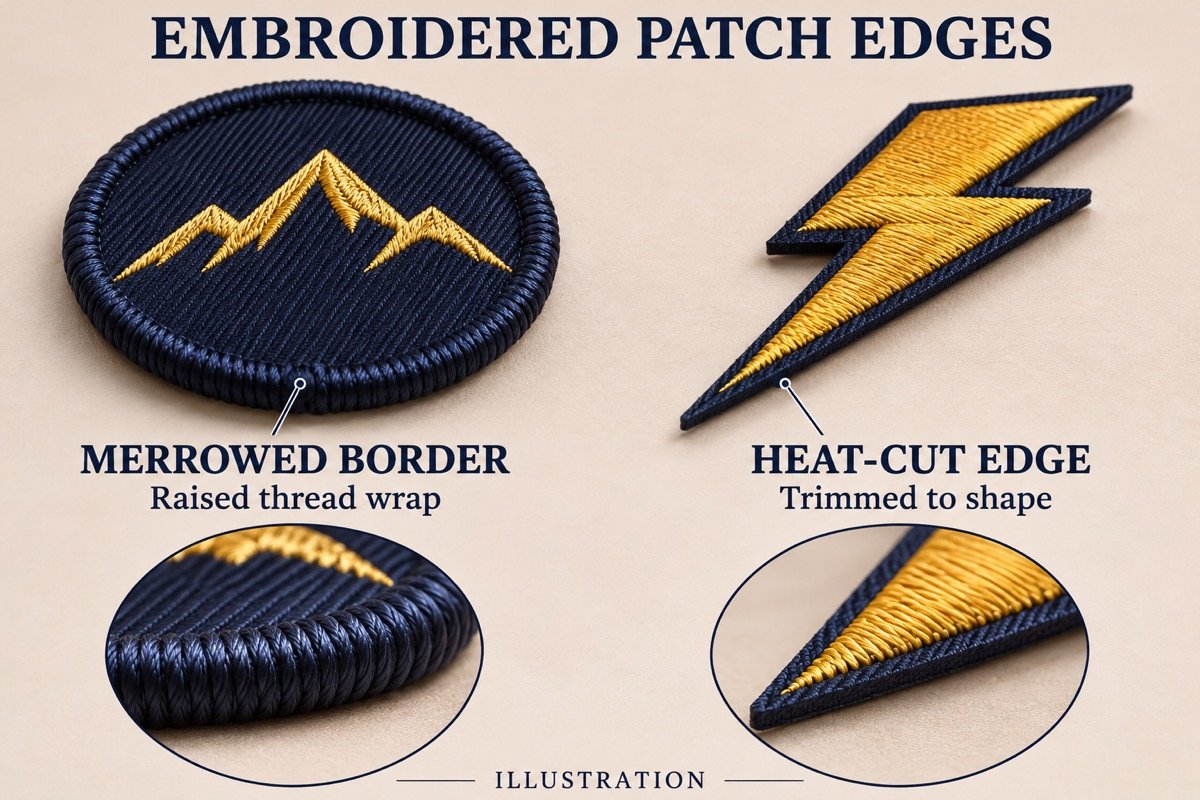
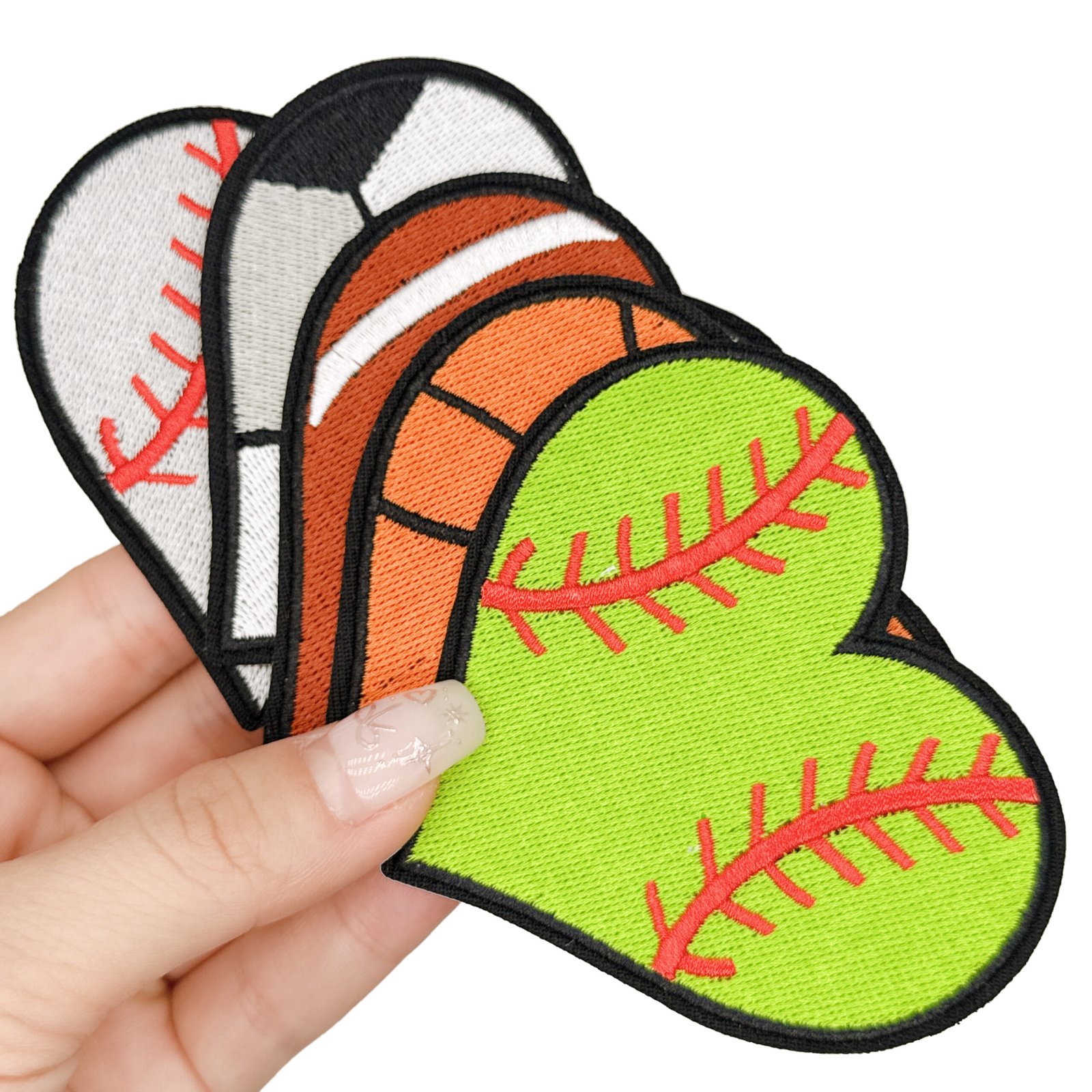
Embroidery is an option when the visible thread texture is part of the brand expression, such as an apparel badge or stitched uniform emblem. Confirm which areas are embroidered and which show the base fabric. A photograph of another patch is useful as a reference, but it does not replace the dimensions and construction for your own design.
Check small text before choosing the process
Compare both proposals at the same finished size. Neither a larger screen preview nor a different supplier’s sample proves that every fine line in your logo will reproduce clearly. Ask which details need simplifying, enlarging or a different treatment, then approve those changes before production.
For embroidery, thread choice and the prepared stitch design affect the result. Madeira’s thread overview describes finer threads intended for small lettering and detail. Ask the manufacturer to review the practical construction for your artwork instead of assuming one minimum text size applies to every design.
Choose the backing separately from the face material
The patch face and the attachment are two different decisions. Tell the supplier whether the item already has a loop panel, whether the patch needs to be removable, or whether it will be sewn or heat-applied. For hook-and-loop, state whether you need the patch-side fastener only or a matching loop piece as well.
For heat application, confirm compatibility with the actual fabric, coating and care instructions. For sewing, agree the edge or sewing provision and the intended stitch position. Our embroidered patch backing guide explains the attachment details to include in a quotation.
Compare outdoor use and cleaning without assuming a guarantee
A moulded face, a textile face, the backing and the garment do not behave as one interchangeable material. Describe rain, dirt, abrasion, washing or other relevant use conditions and ask how the complete sample should be checked. Agree the cleaning method and any performance requirement with the supplier.
A PVC patch face alone does not establish that the finished patch, adhesive, sewing holes or garment assembly meets a waterproof requirement. Likewise, the appearance of an embroidered sample does not establish its wash or colour performance. Request confirmation for the specified materials and application rather than relying on a general material label.
Compare bulk quotations on the same basis
Send the same artwork, dimensions, backing, quantity per design, packing and delivery destination for both options. Ask suppliers to separate product pricing, any tooling or setup, samples and shipping. Confirm which charges would apply again if the design, size or backing changes on a repeat order.
There is no reliable rule that one process is always cheaper. The result depends on the actual construction and order scope. Read our embroidered patch cost factors and quotation comparison checklist before comparing totals.
Approve the complete sample before bulk production
Check both designs at their quoted finished dimensions, including readable text and outline.
Compare colours and surface appearance against the approved references.
Inspect the border, backing and attachment on the intended material or panel.
Agree the use and care checks relevant to your project.
Confirm quantity per design, packing and whether mating pieces are included.
Retain the artwork revision and sample specification for repeat orders.
Request a PVC and embroidered patch comparison
If both processes remain suitable, ask for two clearly labelled options using the same brief. Send your artwork, patch size, backing, quantity per design and delivery destination , together with the garment or bag details. This gives your buyer a practical comparison of appearance, attachment and total quotation scope.