“Same as last time” is a useful starting point for a repeat order, but it leaves important questions unanswered. Which artwork revision was approved? Does the new quantity include the same backing? Is the garment still the same fabric?
Before reordering custom embroidered patches, bring the previous order number, approved physical sample and current requirements together. The aim is to give both buyer and factory a clear comparison reference and a written record of anything that has changed.
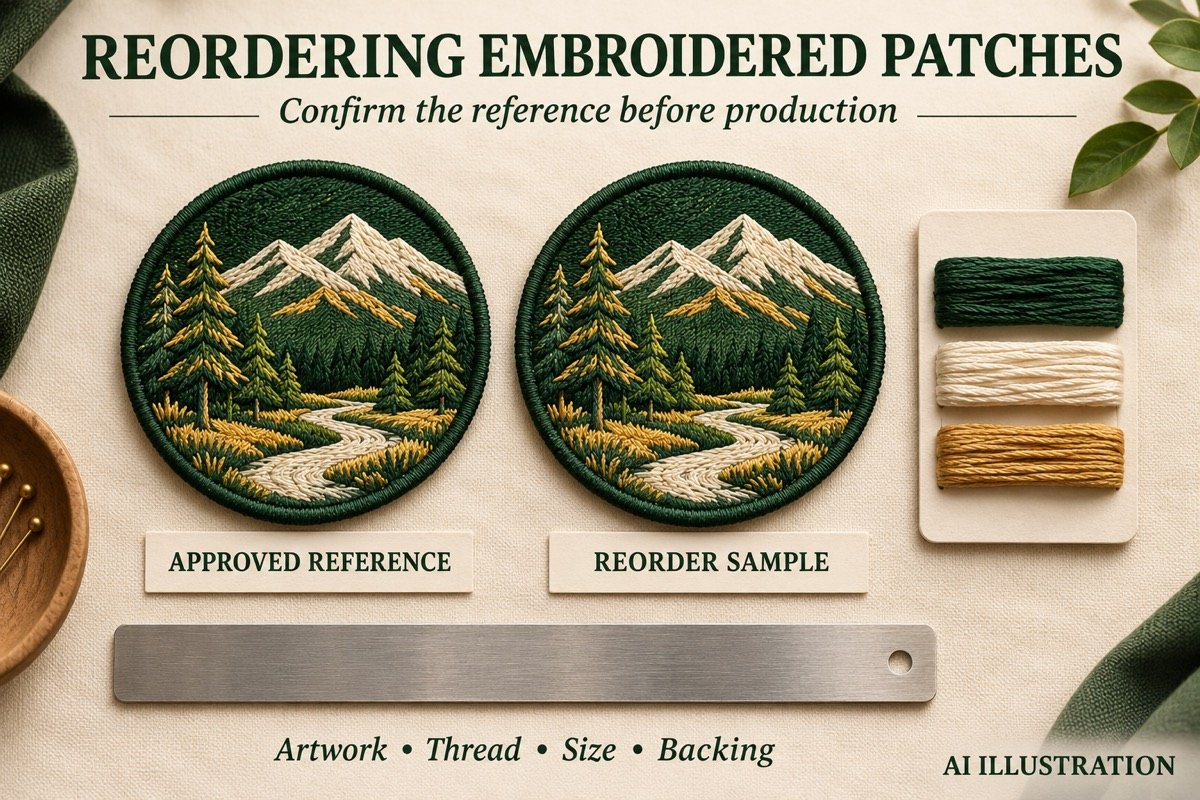
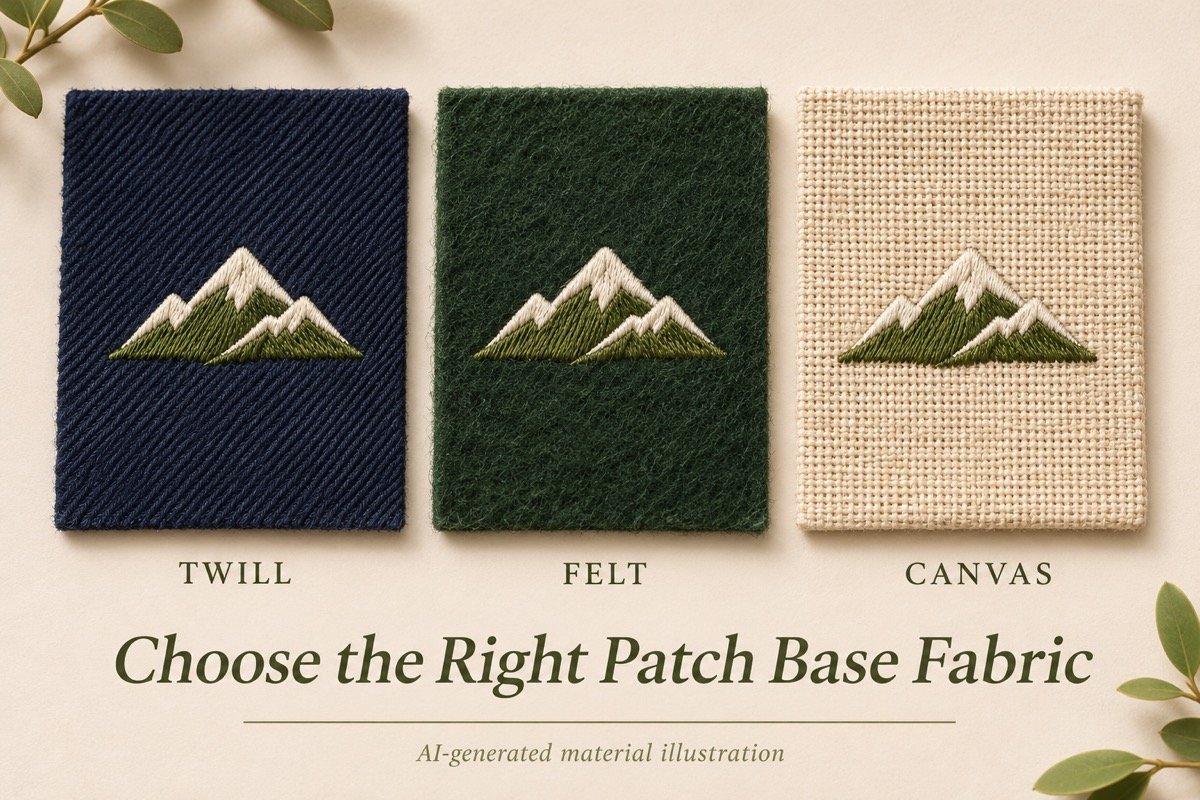
AI-generated illustration of a repeat-order comparison. Confirm actual sample references, specifications and acceptance requirements with your supplier.
Identify the approved reference
Send the previous purchase order or supplier order number, the design name and the sample approval date. Add clear front and back photographs so the supplier can locate the correct job. Ask them to confirm the reference before preparing the new quotation.
Keep an unused approved sample where possible. A patch removed from a worn or washed garment may help identify the design, but it may no longer represent the original colour, shape or backing condition. Mark that difference when sending a reference.
Record who holds the reference sample and its ID. If buyer and supplier keep separate samples, confirm that both came from the same approved version. Use the sample approval checklist to record the physical reference.
Confirm whether this is an exact repeat or a revised version
Put every change in one list. A new slogan, altered border, different thread or smaller outline creates a different approval question, even when the main logo stays the same. Avoid leaving an older attachment in the email without explaining whether it is still current.
For example, a previous patch measuring 70 × 40 mm and a new request for 80 × 45 mm should be recorded as separate size versions. Those are illustrative dimensions, not recommended standard sizes. Ask the supplier to review the revised layout before production.
Wilcom explains that embroidery does not behave like an infinitely scalable graphic: changes in size can require different stitching decisions. Treat resizing as a design review rather than assuming the old production file can simply be enlarged. Embroidery scaling reference
Record the complete thread and fabric references
A colour name such as “navy” is not enough for a repeat specification. Record the thread manufacturer, product range and shade reference, together with the base fabric colour. Include the border thread if it differs from the logo colours.
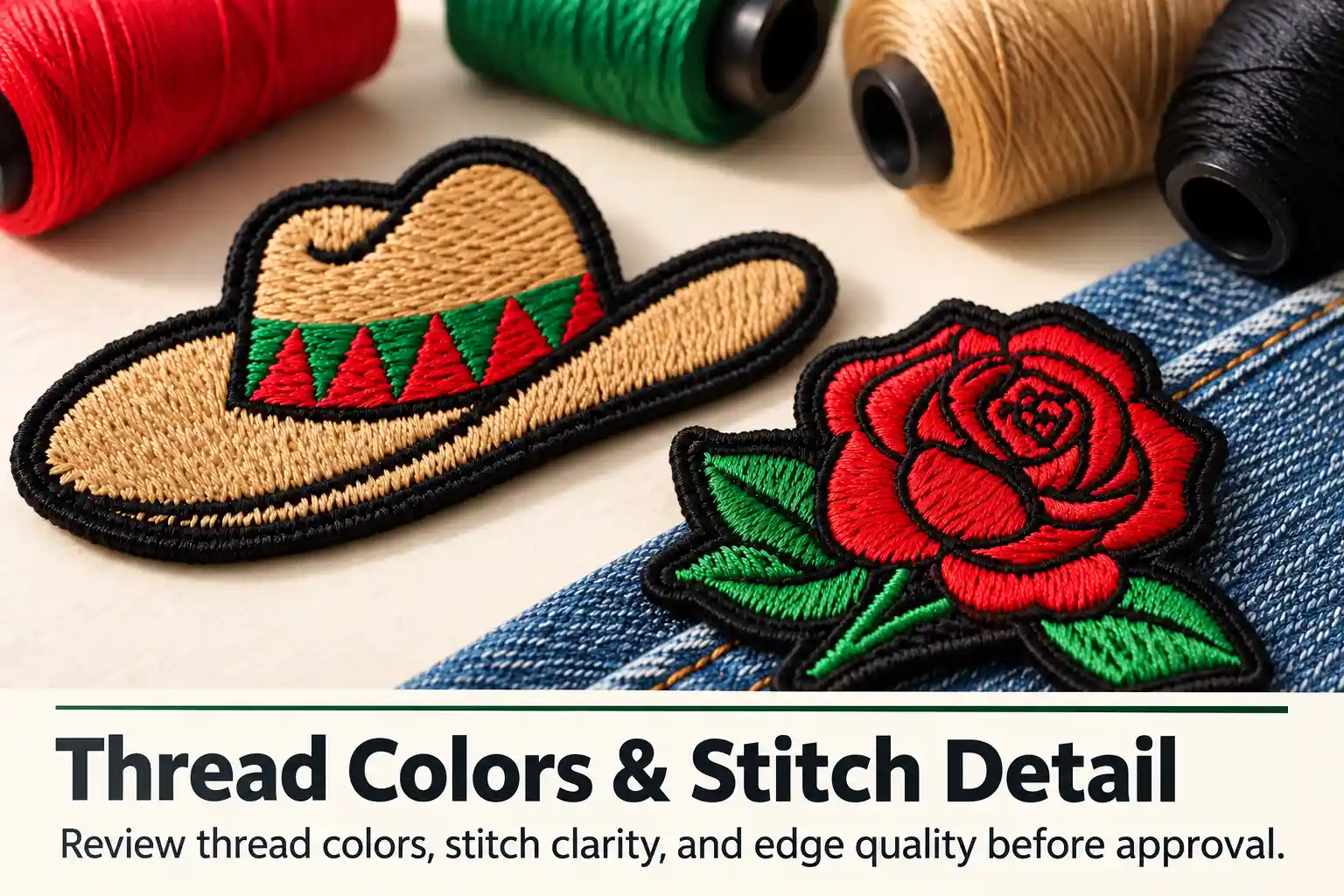
Compare the proposed sample and approved reference side by side under the same viewing conditions. Madeira notes that monitor displays and paper reproductions may differ from actual thread, and directs precise matching to physical shade cards. Thread colour reference
Ask the supplier to disclose unavailable materials and proposed substitutes before production. A matching colour code is useful for identification, but agree on the physical comparison and acceptance requirements too. Keep any newly approved material reference with the reorder record.
Recheck the border, backing and installation
Review the patch from the reverse side as well as the face. Confirm the border construction, finished dimensions and backing specification. A front photograph cannot establish whether the order includes sew-on, heat-applied or hook-and-loop attachment.
For hook-and-loop patches, state whether the separate loop panel is included and whether its dimensions have changed. Use the hook-and-loop purchasing guide when the original order notes do not distinguish the two parts.
If the patch goes onto a garment or bag, confirm fabric composition, stretch, installation location and whether attachment happens before or after assembly. Recheck the installed sample if the item model, fabric or application method changes. Include any agreed washing or care check.
Agree on checks before the repeat batch starts
Ask what the supplier needs to verify the repeat order and whether a new sample is required. The decision should reflect the changes and the project requirements. If a new approval is required, state who releases production and which sample or proof they are approving.
| Check |
Reference to keep |
| Design and dimensions |
Approved revision and finished outline including the border |
| Colour and appearance |
Physical sample, thread references and base fabric |
| Attachment |
Backing specification and installed sample where required |
| Order details |
Quantity per design, packaging, destination and agreed schedule |
Agree on acceptable dimensional and visual differences before production. Write down the measurement method and any tolerances specifically agreed for the order. Do not introduce a tolerance after delivery that was never discussed during approval.
Confirm the commercial details again
A previous price or lead time does not automatically establish the new order terms. Request an updated quotation showing quantity per design, backing, included components, packaging and delivery destination. Confirm how sampling, approval and dispatch fit the required arrival date.
If the repeat order moves to another supplier, provide the artwork and specification you are entitled to share, plus a physical reference. Ask what must be recreated and reapproved. A familiar design name alone will not give the new factory a production reference.
Frequently asked questions
Can I reorder with only the previous order number?
Use it to help locate the job, then confirm the artwork revision, sample reference and current specification. Include front and back photos when the records are incomplete.
Should every reorder require a new sample?
Agree with the supplier based on material, artwork, size and installation changes, as well as the buyer's approval requirements. Record the decision before production starts.
What should I send for a repeat-order quote?
Send the previous order number, approved sample ID, artwork revision, finished dimensions, quantity per design and a complete change list. Add thread, base fabric, border, backing, installation and delivery requirements. Request a repeat-order quotation through the custom embroidered patches page.