A logo can look right in an artwork file and still disappoint when it arrives as embroidery. The question is not simply which green to use. It is which thread, on which fabric, in which stitched construction the buyer is approving.
Quick answer: how do you match thread colors for embroidered patches?
Start with the brand’s color reference, ask for available physical thread options, and approve a stitched sample on the intended base fabric. Record the thread manufacturer, range and color number for every design area. Keep the approved patch and a dated specification for bulk production and repeat orders. A screen image or Pantone reference starts the discussion; it does not replace approval of the actual embroidery.
1. Use Artwork Colors as the Starting Reference
A screenshot leaves the supplier guessing whether your logo is dark green, blue-green or simply affected by the display. Send the original artwork and brand color instructions when available. Identify each colored area, including lettering, border and any visible base fabric.
Madeira USA advises that electronic and printed representations may differ from actual thread and recommends a physical color card for precise selection. Photos remain useful for showing layout and marking corrections, but they should not be the only approval record for a color-critical order. See our embroidered patch artwork guide for preparing the design file.
2. Treat Pantone Matching as a Proposal to Review
Provide the complete Pantone reference from the brand guide, including its system and suffix where applicable. If the guide contains several versions, identify the intended physical reference instead of asking the supplier to choose between them.
A Pantone reference and a thread number serve different purposes. One communicates the target; the other identifies a product in a particular thread range. Madeira UK’s conversion guidance describes selecting the nearest available thread shade and recommends approving embroidered samples before fulfillment. It does not promise an exact match for every reference.
Ask the supplier to show the proposed match and nearby alternatives if the brand color is critical. If none is acceptable, resolve that before approving production. Do not assume a thread substitution is approved because its name sounds similar.
3. Record the Actual Thread and Base Fabric
“Use the same navy” is not a repeatable specification. Record the manufacturer, thread range, color number and relevant material or finish for each area. The number needs its product context; it is not a universal code shared by every supplier.
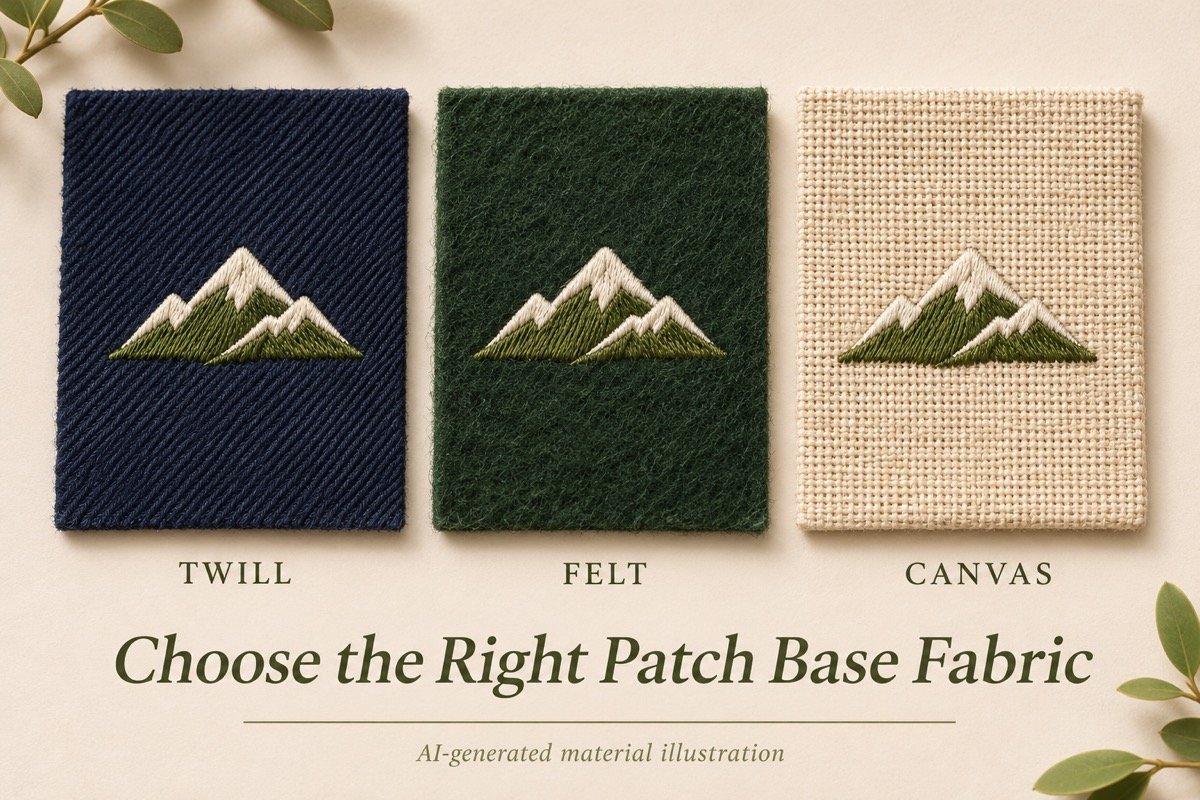
The base fabric needs its own reference. On partially embroidered patches, exposed twill is part of the design. A correct thread choice can still look wrong beside a different ground color. Compare those materials together, especially around fine lettering and open areas. Our embroidery coverage guide explains how exposed fabric affects the finished layout.
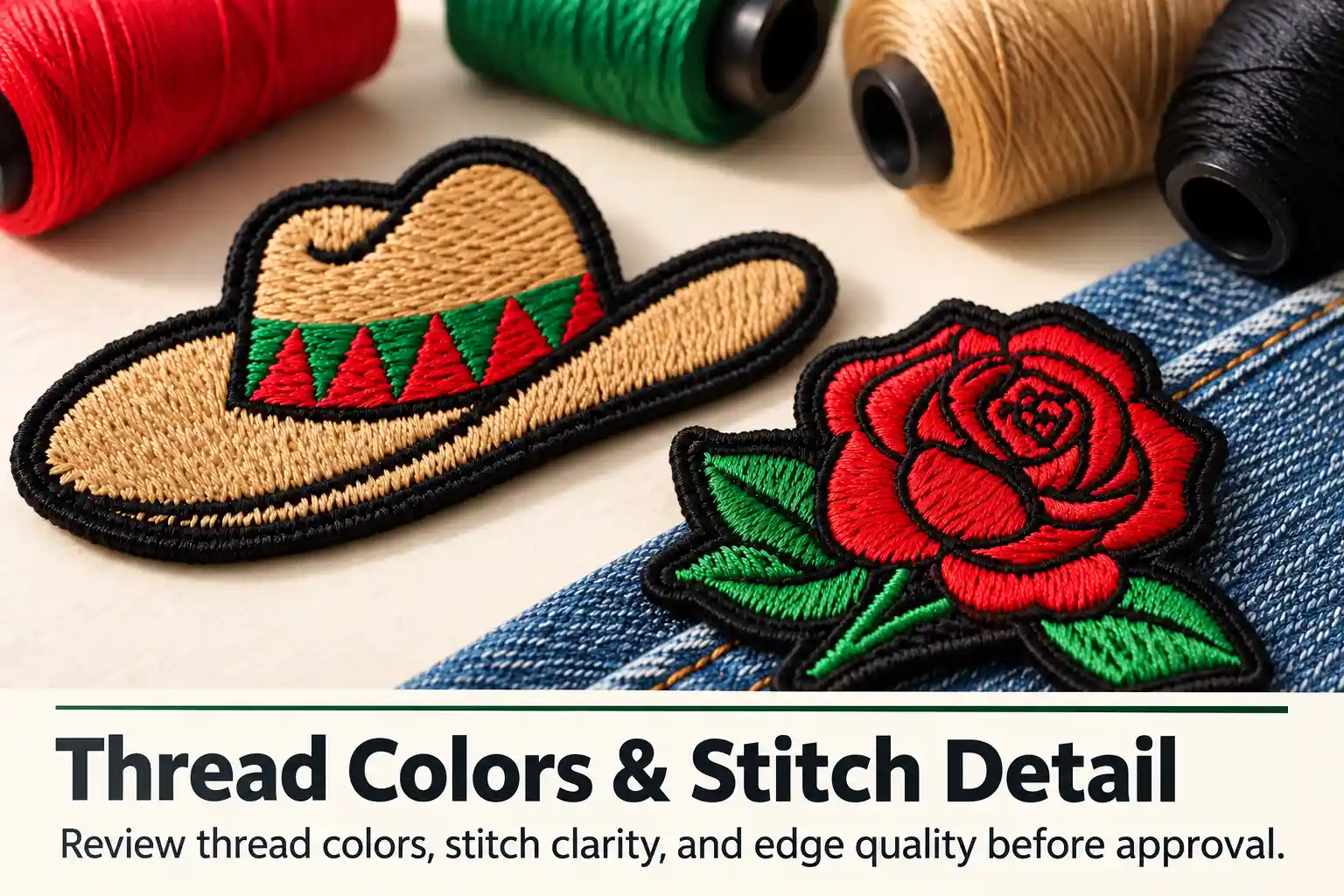
AI-generated illustration of thread and stitch detail. This image is not a physical color standard or evidence of a color match. 4. Review the Stitched Sample Under Agreed Conditions
A wound thread card helps narrow the choice, but the finished patch is the purchasing reference. Stitch direction and thread sheen can change how an area catches the light. Compare the complete stitched design with the agreed target, then view it in the intended garment position.
Use the same agreed lighting and viewing conditions when comparing the supplier’s sample and your retained reference. Avoid approving one beneath a warm desk lamp and rejecting another from a phone photo taken elsewhere. If instrumental color measurement is required, agree on the method, material setup and acceptance limit before testing; a tolerance without a method leaves room for disagreement.
Check the smallest lettering, border and adjacent colors as well as the largest fill. Approve finished size and attachment on the intended garment. For apparel, specify the washing and drying conditions and review the sample afterward. Do not infer colorfastness from an unwashed photo.
5. Use a Written Color Approval Checklist
Keep the following information with the approved sample. The entries below describe what to record, not preselected specifications for your order.
Color Matching Records for a Custom Patch Order
Record
What to confirm
Design version
Artwork revision, finished dimensions and a map identifying each color area.
Target reference
Brand color reference or supplied physical standard, with its full identification.
Thread selection
Manufacturer, range, color number and material or finish for each design area.
Base and border
Base fabric reference, exposed areas and border thread.
Approval conditions
Viewing conditions, sample ID, approval date, approver and agreed care-test results.
Production changes
Which material, color or construction changes require fresh approval.
For example, a three-color design needs three thread entries, plus a separate base-fabric reference if fabric remains visible. A border using one of those threads should still be identified on the color map. This is a documentation example, not a limit on available colors. Use the broader patch sample approval checklist alongside this record.
6. Keep the Reference for Production and Reorders
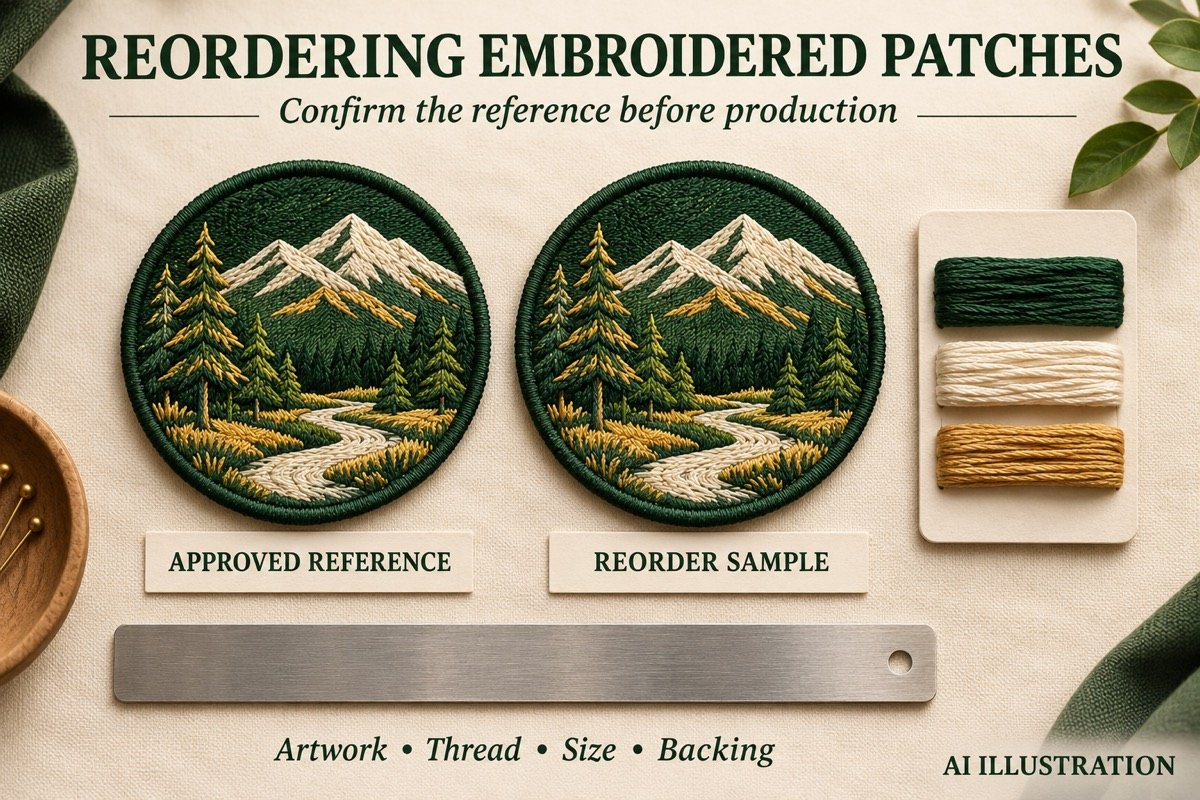
Retain an approved physical patch and the written specification. Ask the supplier to retain a matching reference and record any agreed material-batch information. When a thread or base material changes or becomes unavailable, review the proposed replacement instead of relying only on the old artwork.
For repeat orders, compare the new sample with the retained reference and confirm whether the garment or care requirements have changed. Store reference samples away from prolonged light and contamination. Our embroidered patch reorder checklist covers the other details to reconfirm.
Discuss Your Patch Colors Before Requesting a Quote
Send Heyang Craft your artwork, finished size, quantity per design and color references. Identify any colors that need physical approval. For clothing applications, include fabric composition, stretch, placement, care requirements and whether attachment happens before or after garment assembly. Ask what thread options, sampling steps and charges apply to your project.
Explore custom embroidered patches or request a patch quotation with your color requirements.
Frequently Asked Questions
Can every Pantone color be matched exactly in embroidery thread?
Do not assume an exact match is available in a stock thread range. Ask for the proposed shade and approve a stitched sample against the agreed reference before bulk production.
Is a photo enough to approve patch colors?
A photo helps communicate design changes, but display and lighting differences limit its use for color approval. For color-critical work, agree on physical references and keep the approved sample.
What should I keep for a repeat order?
Keep the approved patch, artwork version, thread manufacturer and range, color numbers, base-fabric reference and dated approval record. Reconfirm any changes before production.
Technical References
These references explain general color-selection principles. They do not establish which thread brands or ranges Heyang Craft will use for a particular order.