A uniform name-patch project can involve different name lengths, several layout versions and department-specific second lines. The quantity for each name also needs to meet the supplier’s minimum. Custom embroidered name patches need both a consistent design and an accurate production list.
Quick answer: what should you prepare for a bulk name-patch order?
Provide one controlled name list with the exact wording and quantity for each entry. Agree on the patch outline, typography, thread references, backing and uniform placement. Review short and long names at the finished size, then approve the list and layout together. Heyang Gift requires at least 50 pieces of the same name; different names cannot be combined to meet that minimum. Confirm preparation charges separately before ordering.
1. Separate the Uniform Design From the Name List
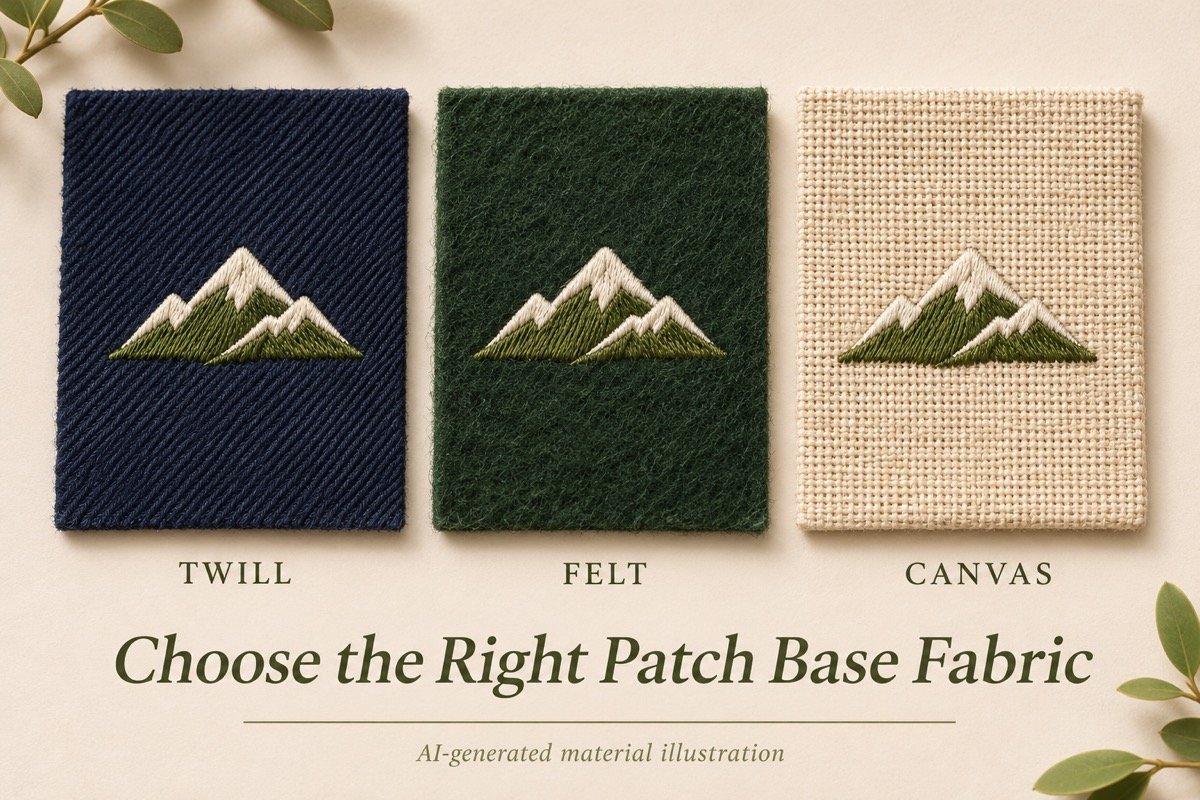
Start with a shared specification: finished width and height, shape, base fabric, border, thread colors, font and backing. Record which elements must remain consistent across the order. Treat the names as variable text within that specification.
List a second line, such as a department or role, separately from the person’s name. Decide whether it appears on every patch and whether it changes by employee. A logo-plus-name layout also needs a defined logo position and an agreed text area.
For Heyang Gift orders, the minimum is 50 pieces of the same name. Different names cannot be added together to reach 50 pieces. Confirm any preparation charges separately. Different dimensions, colors, layouts or lettering can change the production scope. Send the complete requirement to the supplier before comparing prices.
2. Build a Name List That Can Be Checked Row by Row
Use one spreadsheet as the master record. Each row should identify a specific text-and-layout combination and its quantity. Include the exact spelling, capitalization, spaces, punctuation and accented characters you want to appear. An employee number can help your own team distinguish people with identical names.
Example Order List — Fictional Names, Not Customer Data
Row ID
Exact name text
Second line
Layout
Quantity
Packing group
N001
LEE
—
A
50
Service
N002
ALEXANDER
—
A
50
Service
N003
J. MORGAN
SUPERVISOR
B
100
Operations
The example totals 200 patches: 50 with LEE, 50 with ALEXANDER and 100 with J. MORGAN. Each name meets the 50-piece minimum separately. Confirm whether changes to the layout, second line or colors create a separate production variant in the quotation.
Give the file a revision identifier and assign one person to approve it. If a spelling changes after proofing, identify the row and issue a revised master list. Avoid leaving production to reconcile a spreadsheet with corrections scattered through messages.
3. Check Short and Long Names Without Losing Consistency
Agree on what happens when a name does not fit the approved text area. Possible revisions include changing the patch width, reviewing the font or using an approved abbreviation. The buyer should approve the choice; a supplier should not silently shorten a person’s name.
A layout can keep one lettering height and leave different amounts of space beside short names, or use an agreed adjustment rule for longer entries. Review that rule before approving the whole list. Do not stretch a short name simply to fill the same width as a long one unless that appearance is intentional.
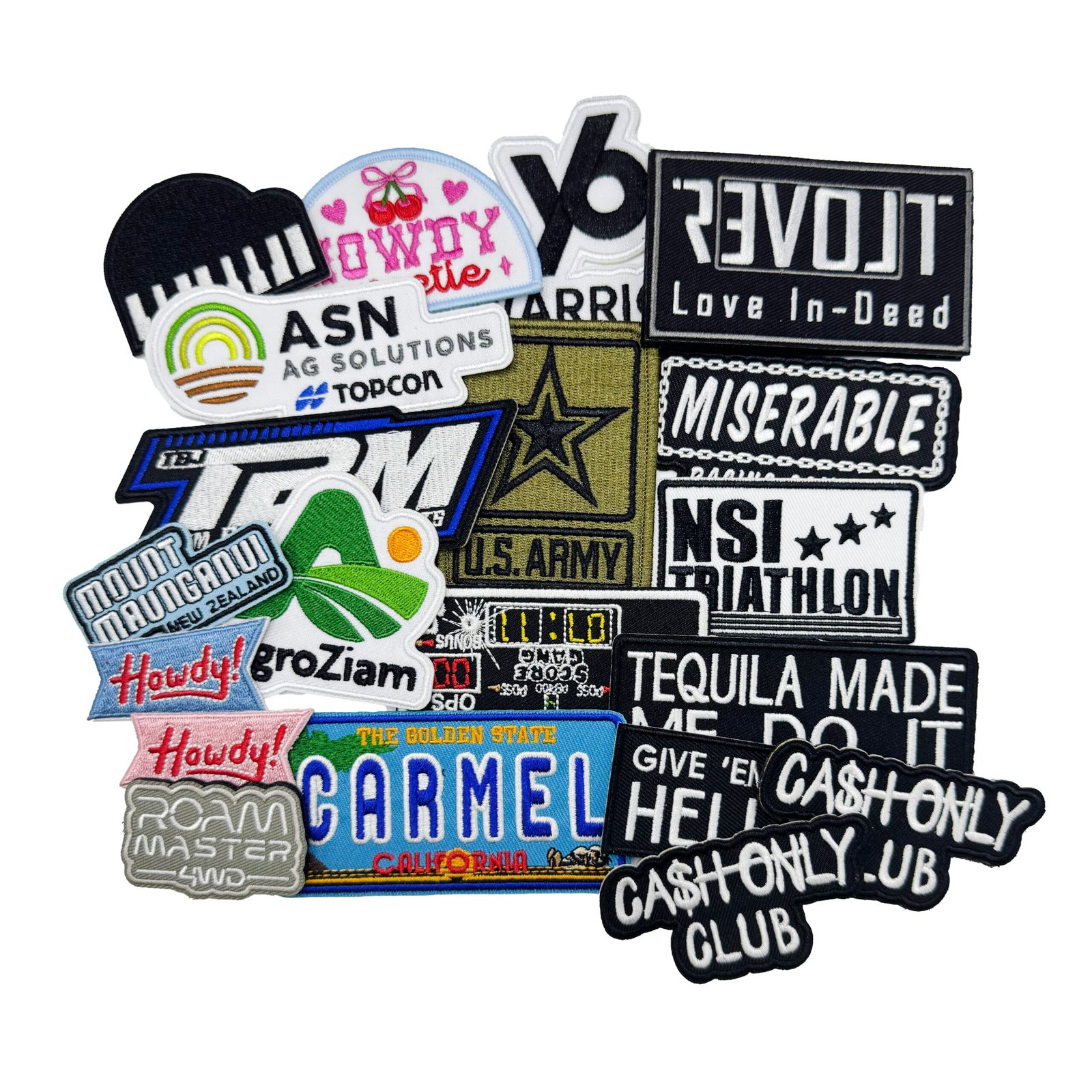
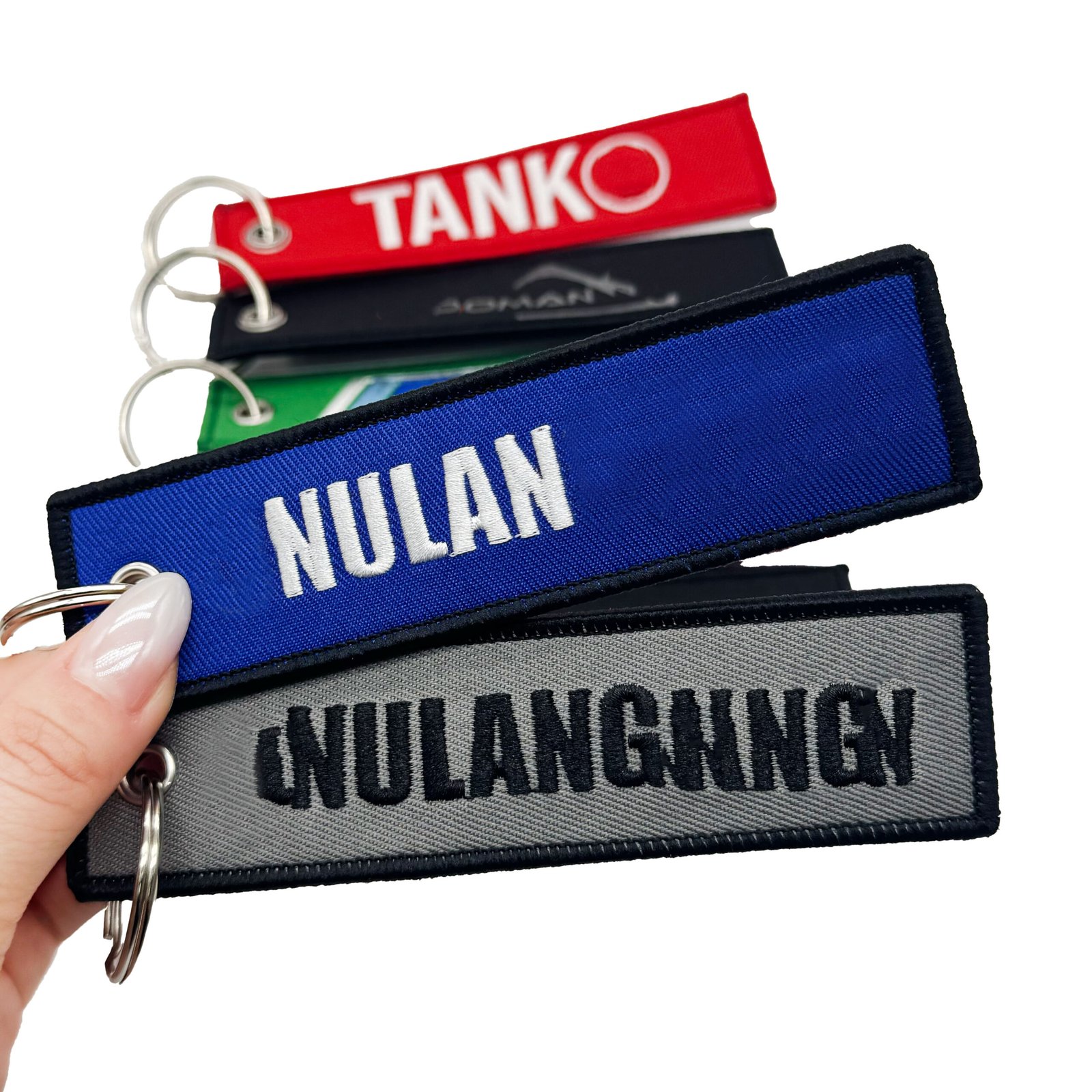
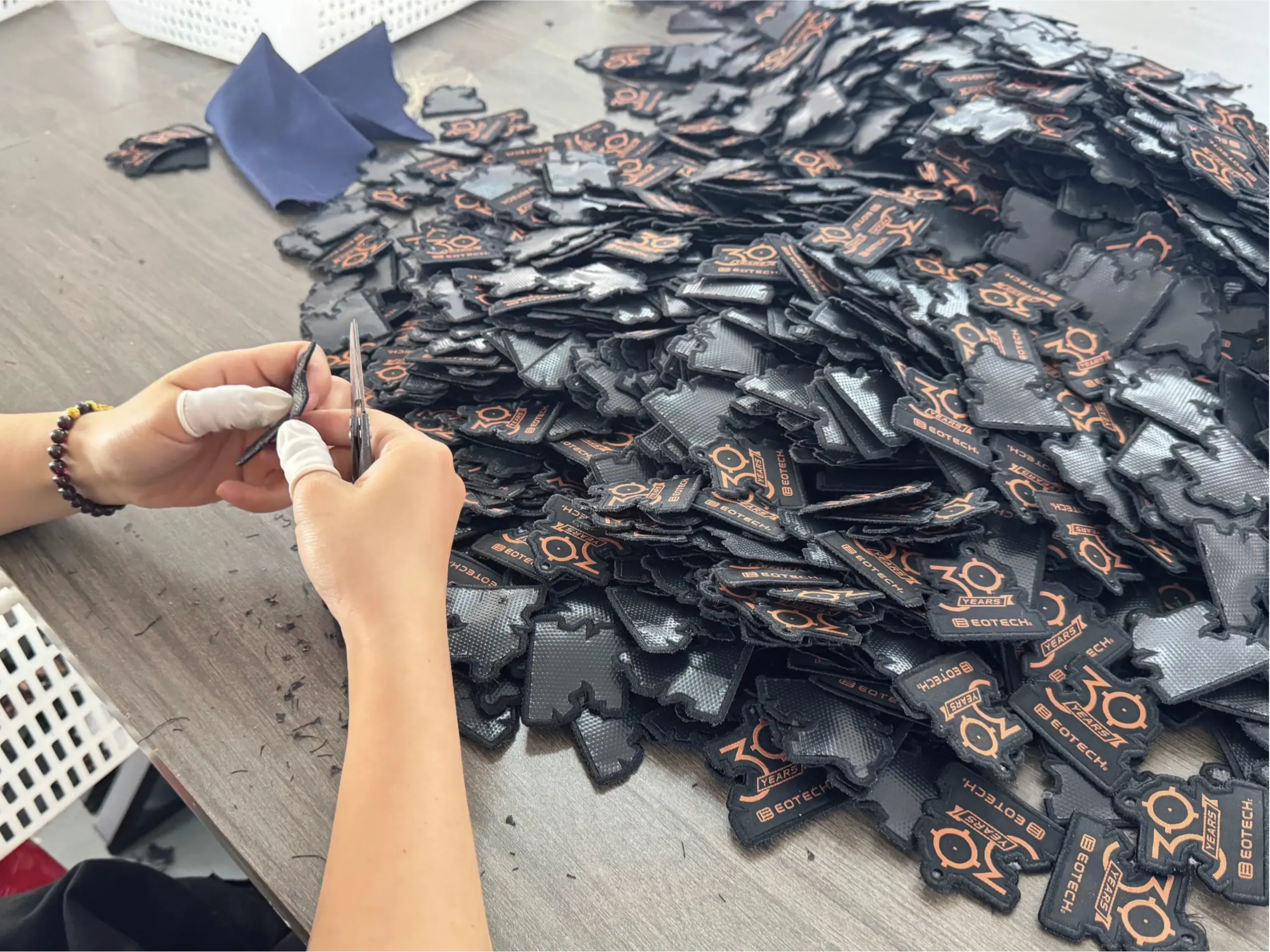
Existing lettering-patch examples from the Heyang Gift website, shown for typography and layout reference. This photograph is not a uniform name-patch order. Ask for proofs showing representative short and long names, punctuation or accents, and any second-line layout. Check the smallest finished characters rather than judging a large screen image. There is no single lettering-height rule that proves every font will stitch clearly. Use the embroidered patch artwork guide to prepare a readable reference.
4. Confirm Fit on the Actual Uniform
Provide the garment fabric composition, stretch, placement photograph and available space. Say whether the patch will be attached before garment assembly or after the uniform is finished. Pocket access, seams and lining can affect where attachment work is practical.
Choose sew-on, iron-on or hook-and-loop backing around the garment and its intended use. For a removable name patch, confirm the receiving loop panel and its usable dimensions as well as the patch itself. A backing label alone does not establish wash performance.
Review an attached sample under the intended care conditions. Agree on the washing and drying method, inspection points and any required test scope before testing. The iron-on versus sew-on guide and hook-and-loop guide cover the attachment choices in more detail.
5. Approve the List and the Physical Sample Separately
A representative stitched sample helps assess lettering, color, size, border and garment fit. It does not prove that every name in a production list has been spelled correctly. Keep two approval records: one for the physical construction and one for the exact text and quantities.
Match the sample to its row ID, layout code and artwork revision.
Check spelling, punctuation, accents, second-line wording and the agreed alignment.
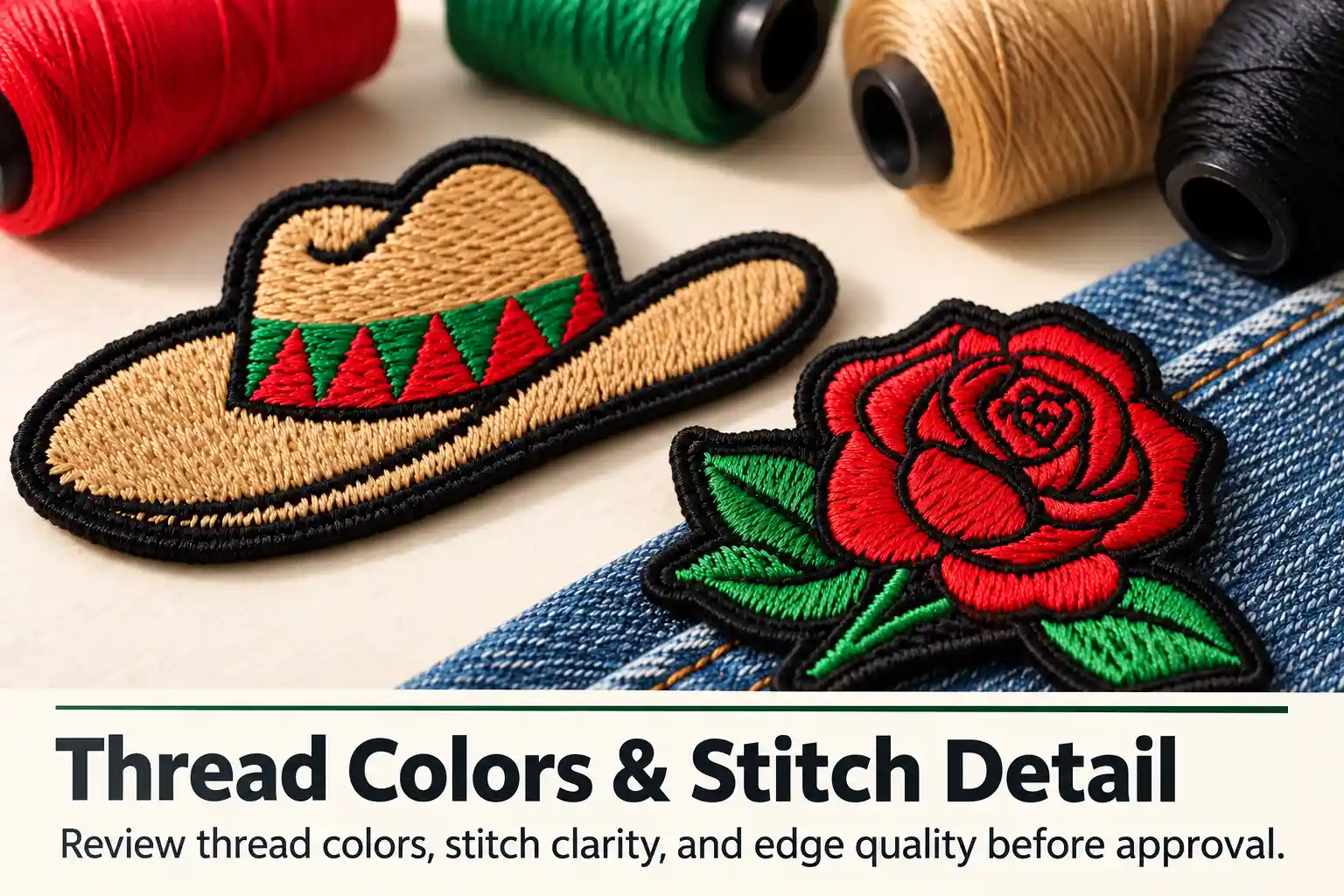
Confirm finished dimensions and thread references, rather than relying only on a photograph’s color.
Approve the backing, placement and attached appearance on the intended fabric.
Record the outcome of the agreed care test and any requested revision.
Sign off the complete name list and quantity total before production release.
If a particular name or character combination remains uncertain, request a separate review rather than extending one sample’s approval to an untested layout. The patch sample approval checklist provides the wider construction review.
6. Plan Distribution and Later Additions
Specify whether patches should be grouped by employee, department or location. Give the packing team the same row IDs and quantities used in the approved list. This makes it easier to reconcile an individual pack with the order record.
For a new employee or a replacement, provide the original specification and identify the added or changed rows. Do not assume a small follow-up quantity has the same price, minimum or schedule as the first run. Ask for the current terms before promising replacements internally.
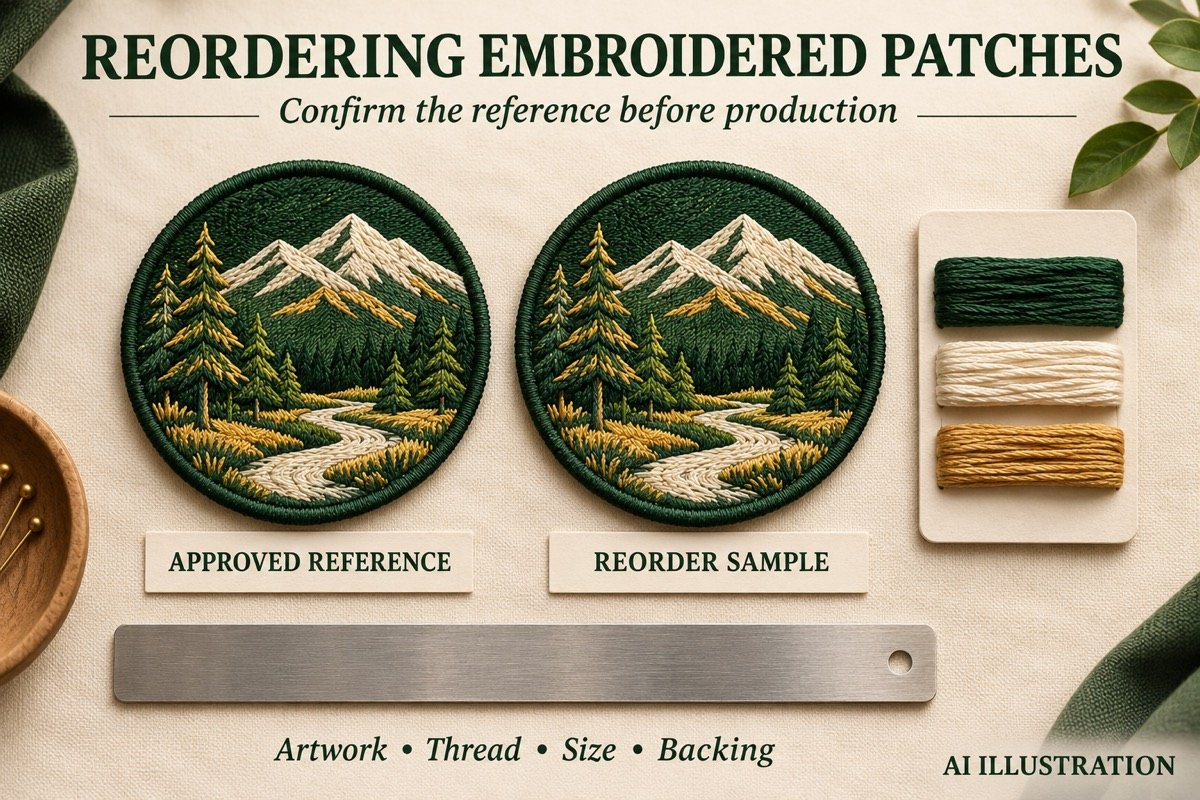
Retain the approved list revision, paired proofs, sample reference, dimensions, thread references, backing and packing instructions. See the embroidered patch reorder guide for keeping those references usable.
Request a Quote for Your Uniform Name-Patch Project
Send Heyang Craft the name list, quantity for each entry, desired patch dimensions, layout reference and uniform details. Include the destination postcode, packing groups and required arrival date. Mark anything still undecided so it can be reviewed before sampling.
The minimum is 50 pieces of the same name; different names cannot be combined to reach 50 pieces. For example, 25 pieces with one name plus 25 with another do not meet this minimum. Ask the quotation to confirm how text or layout variations affect preparation charges and the terms for later additions. Confirm product, preparation, sample, packing and shipping costs against the same list revision.
Review Heyang Gift’s custom embroidered patch options or send your uniform name-patch list for a project review .
Frequently Asked Questions
Can different employee names be combined in one order?
You can submit a list of names for review, but each name must meet the 50-piece minimum separately. Different names cannot be combined to reach 50 pieces. Confirm any preparation charges in the quotation.
Should every name have the same lettering size?
Agree on a layout rule and review both short and long entries. Any change to lettering size, patch dimensions or spelling should be approved rather than applied automatically.
Does approving one sample approve every name?
No. The physical sample confirms the agreed construction and representative lettering. The complete list still needs a separate text-and-quantity check before production.